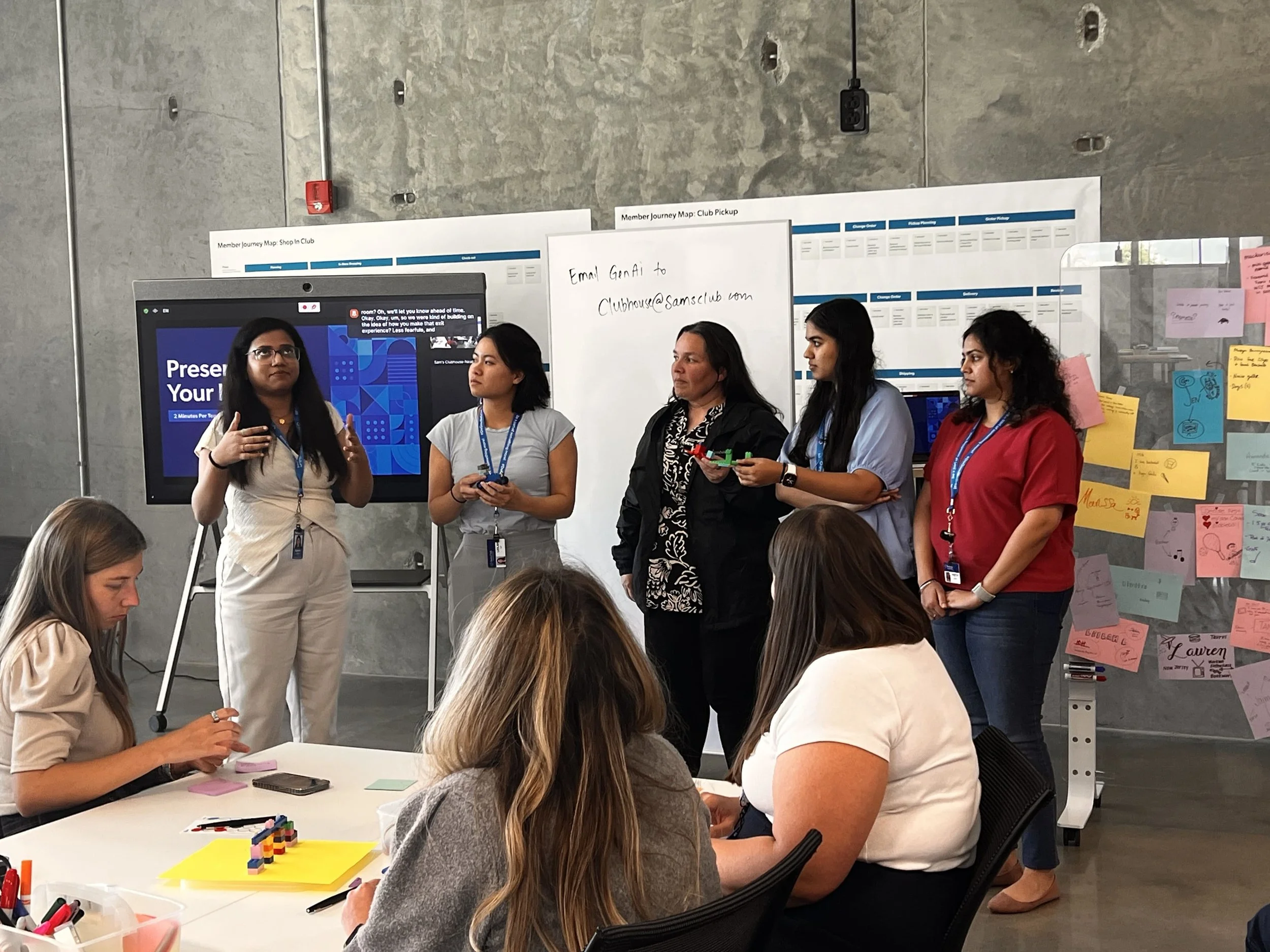

Built an enterprise innovation studio that ran without the primary facilitator in every room
Role: Studio Director & Design Operations
Scope: Studio launch, demand surge, system instrumentation, capability at scale
Transformed a high-demand innovation studio from a facilitation bottleneck into a scalable capability platform through measurement, routing, and operational systems.
Impact at a Glance
-
300+ Walmart Global Tech new hires reached
through onboarding framework that expanded without a leadership directive
-
90 sustained independent practitioners
9% conversion rate across 1,131 participations over a year through two program iterations
-
40% reduction in content production overhead
AI-augmented workflows freed studio capacity for higher-value facilitation work
The Problem
Clubhouse launched as a shared service for innovation, design thinking, and experience design. Demand outpaced what any single facilitator could support.
What was breaking
1,750 participations in the first five months proved the facilitation model was not sustainable
Vague requests without problem clarity consumed studio capacity before scope was defined
No measurement proving training delivered business value
Every workshop required direct facilitation because teams could not operate independently
Studio risked becoming a permanent bottleneck instead of a capability multiplier

The Decision That Mattered
How do we instrument the studio so capability scales faster than demand?
What I Built
Measurement & Proof Systems
The mechanism:
Engagement funnel tracking (awareness → attendance → repeat → sustained practice)
NPS scoring and learning satisfaction metrics
Conversion tracking proving behavior change
Weekly and Quarterly C-suite reporting infrastructure
Why it mattered:
First structured ROI proof for innovation work at this studio
Gave C-suite visibility into what actually changed behavior vs. what felt good
Moved studio from anecdotes to data-driven decisions
Adoption proof:
Quarterly C-suite reports established showing adoption patterns and business impact. NPS 70.9 across programs. Measurement framework adopted for future studio initiatives.
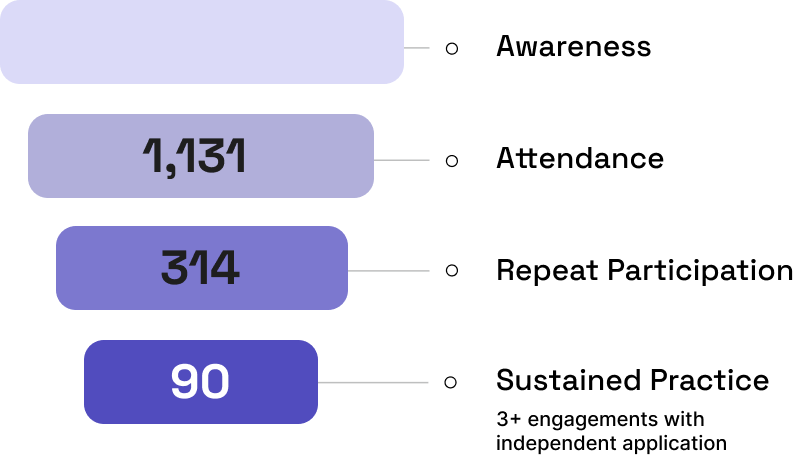
Tracking design evolved across two program phases, moving from team-based cohort tracking to individual participation measurement as the program matured.
“She has a rare talent for drawing out the right voices in the room, synthesizing competing perspectives, and steering the group toward concrete, actionable outcomes. The agenda never derailed, yet everyone felt heard.”
Mike Schubert — Principal Product Manager, Sam’s ClubWork Routing & Request Management
The mechanism:
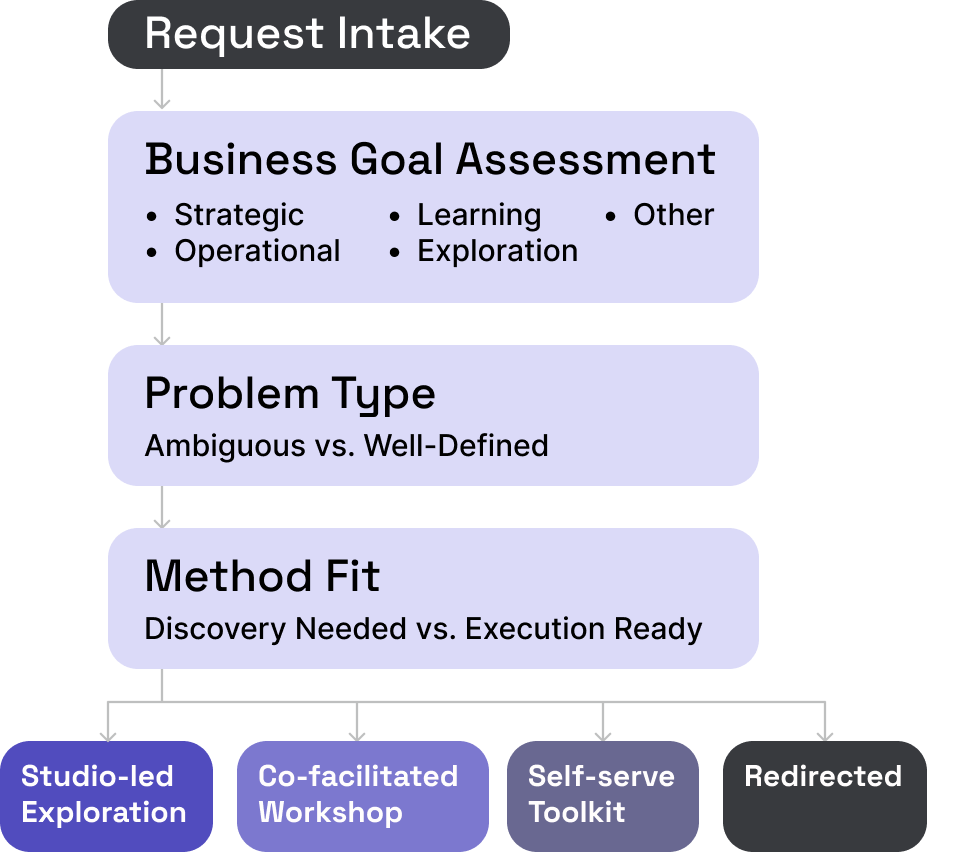
Intake model splitting exploratory work (unclear problems) from executional work (clear scope)
Triage criteria and service definitions surfaced before team capacity was committed
Problem-framing workshop model as the required entry point for product teams
Why it mattered:
Stopped vague requests from wasting studio capacity
Proved teams could move fast without sacrificing clarity
Reduced late-stage pivots and misaligned work
Adoption proof:
The intake model shifted when senior and C-suite partners engaged with the studio. Relationships built during problem framing meant teams came earlier, before submissions, and were more open to reframing the ask.
The studio influenced work direction across every level, including up. One product team compressed a three-month exploration cycle to three days using studio problem-framing methods.
“Jen is proactive about her workload and her team’s bandwidth. Extremely detail focused without becoming a micromanager. She actively works to protect her team, while also challenging them to grow and develop their talents.”
Brad Clisso — Manager, Space Design Solutions, Sam’s ClubAccessibility as Embedded Capability
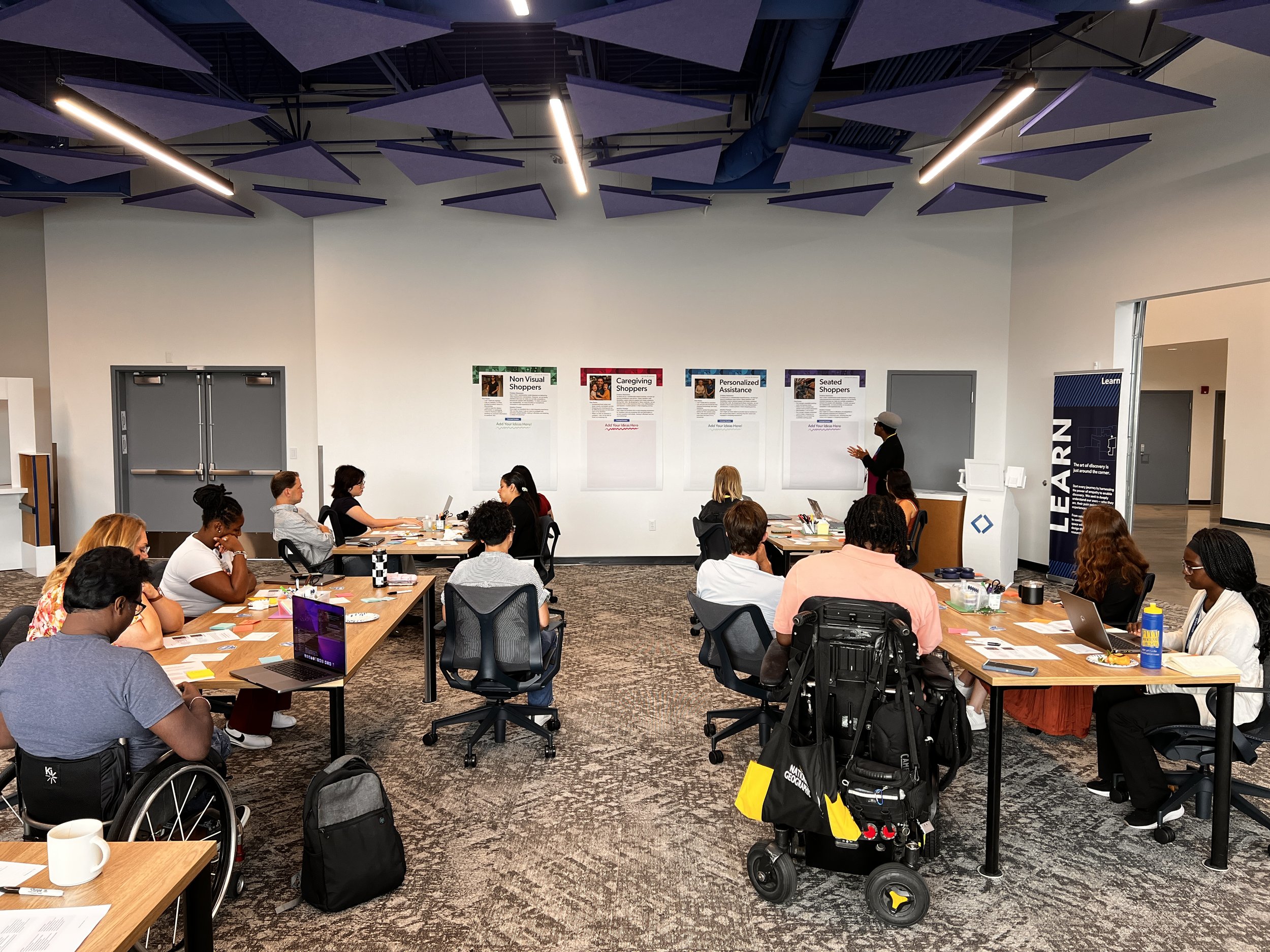
Led the operational design of the Disability Inclusion Lab, embedding accessibility into studio workflows as a repeatable capability rather than a late-stage check.
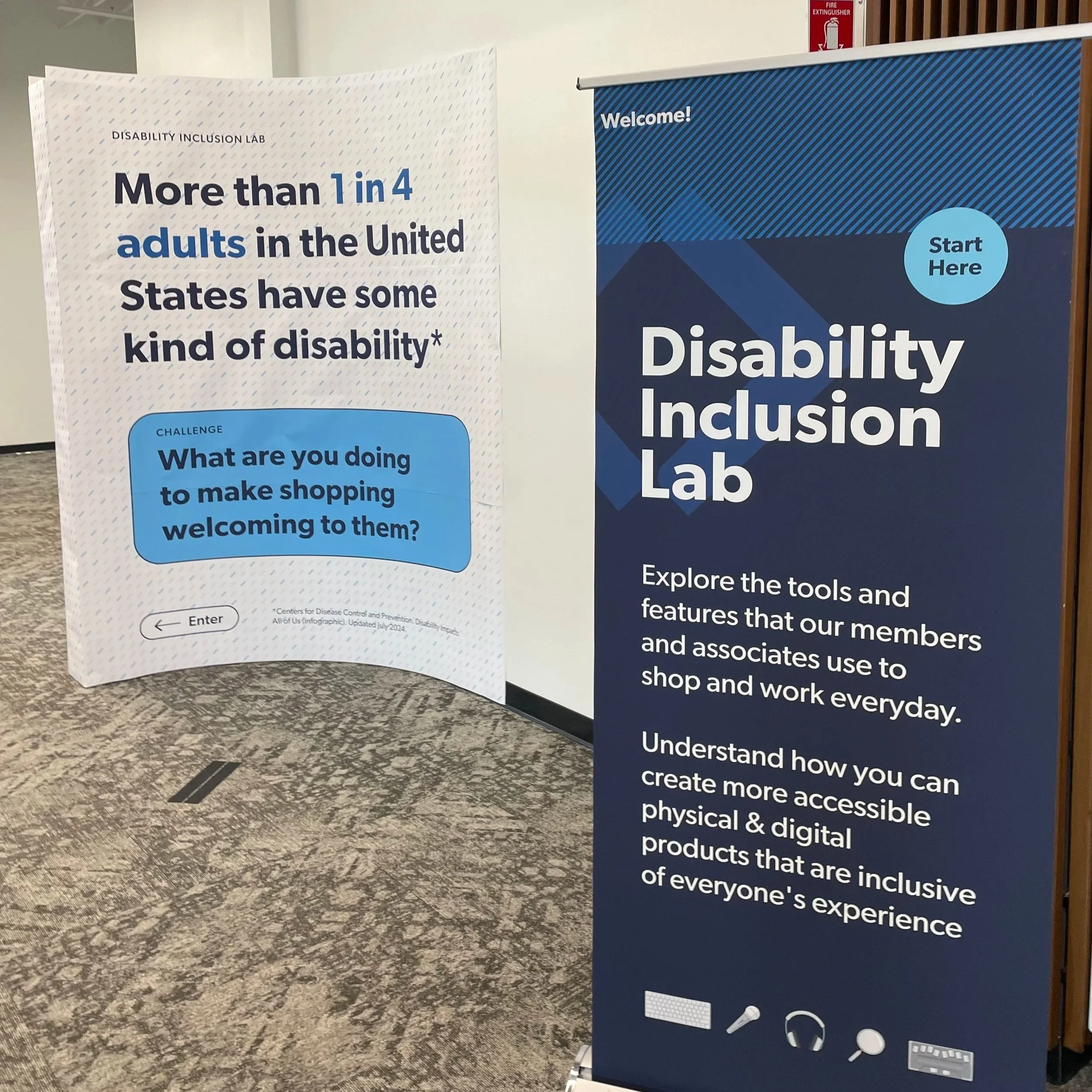

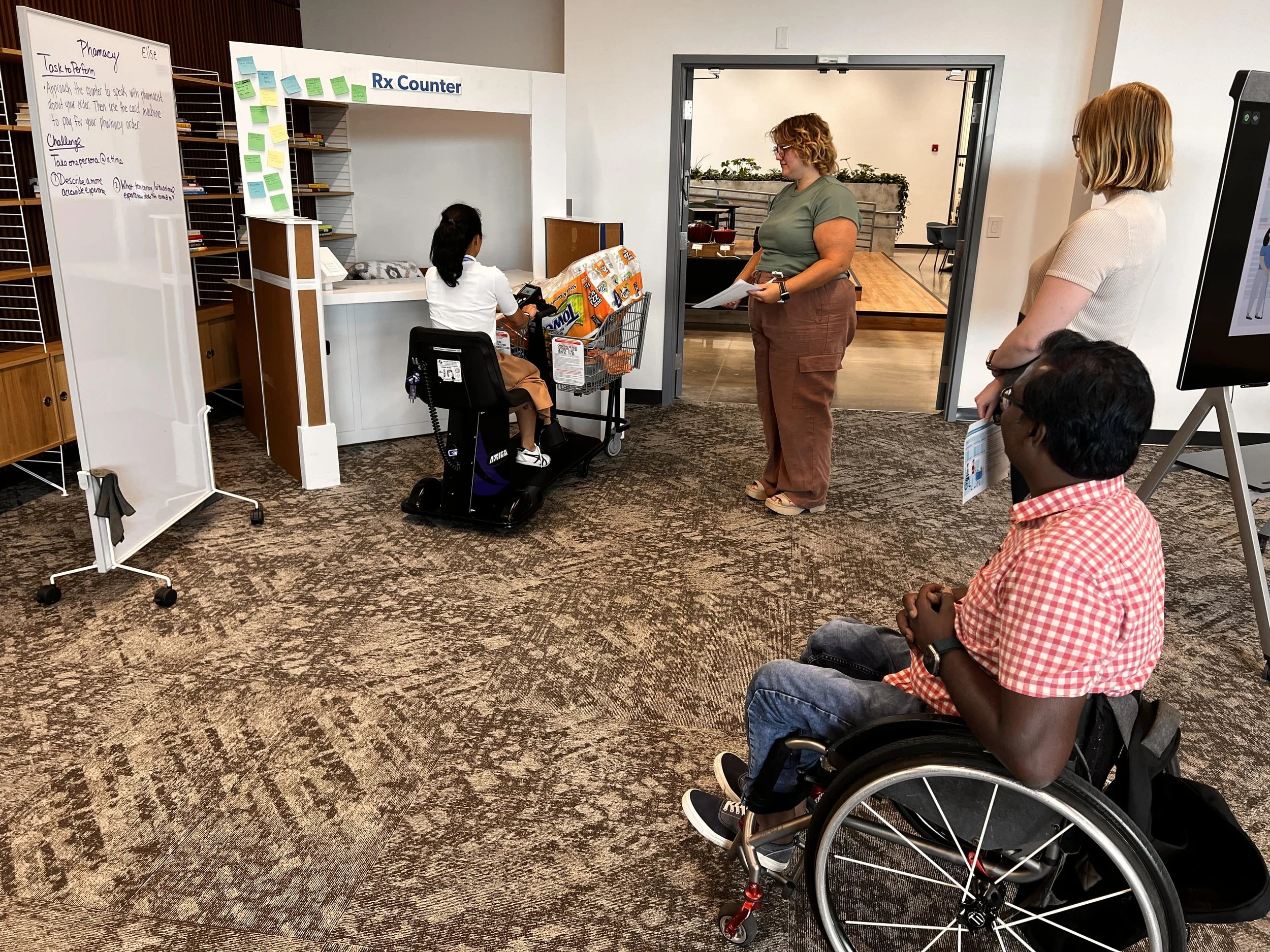

“Through her operational excellence and unwavering focus on collaboration, we were able to launch the Disability Inclusion Lab experience in the Clubhouse—an accomplishment that reflects both her vision and her ability to bring people together.”
Jamila Evilsizor — Accessibility Researcher, Sam’s ClubThe ops infrastructure made scale possible. The capability systems are what scale looked like.
Curriculum Architecture
The mechanism:
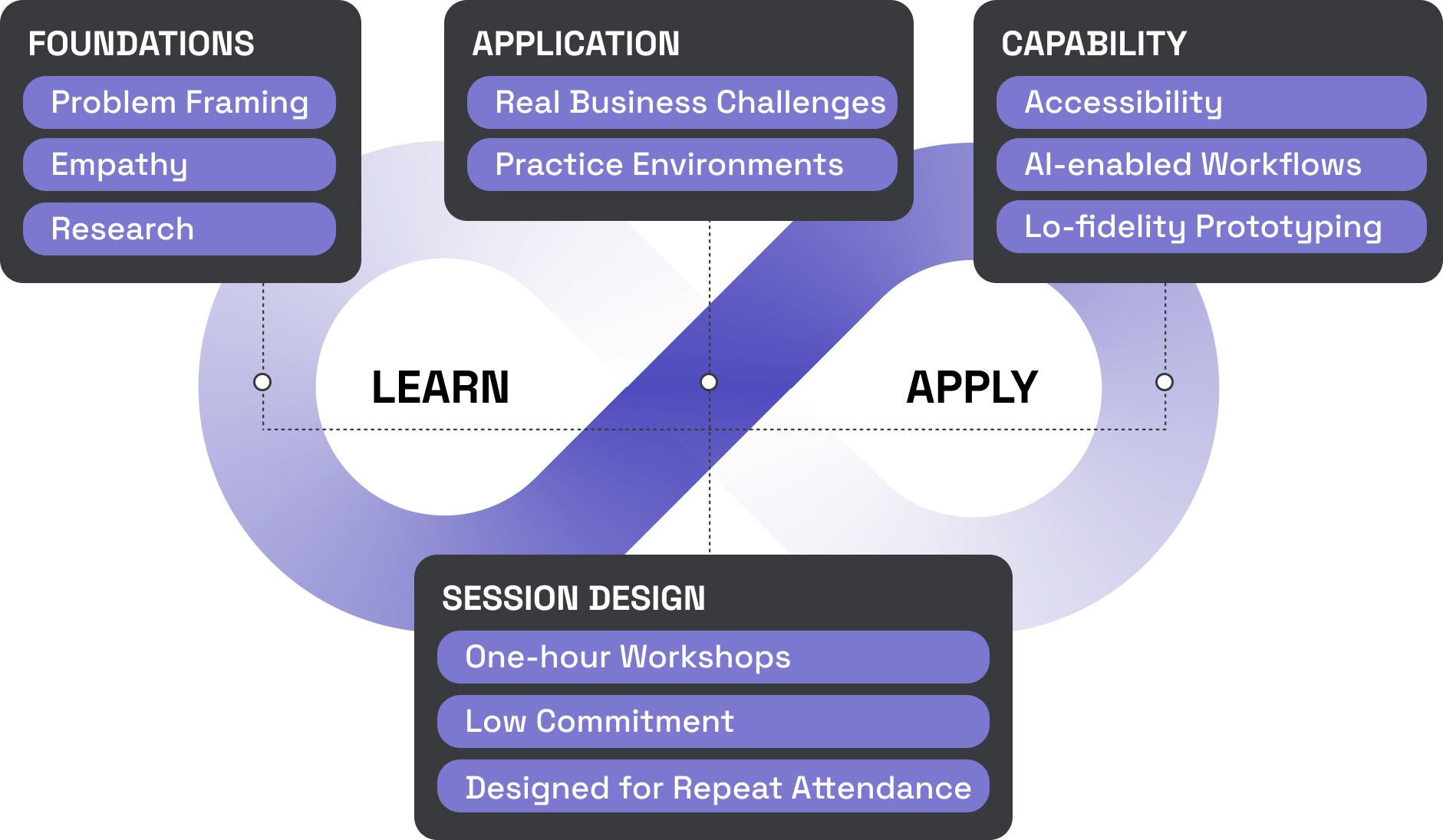
Designed the human-centered design curriculum as a modular system rather than a linear course
Teams could enter at different points based on need, while shared frameworks preserved consistency
Sessions balanced core design thinking skills with hands-on application so learning translated directly into real work
Accessibility and AI-enabled workflows were embedded across the curriculum, not treated as standalone topics
Why it mattered:
A modular system meant teams could build capability over time without a large time commitment
The design decision of one hour, one skill, and repeatable, is what made 1,100+ participations possible
From Training to Sustained Practice
The mechanism:
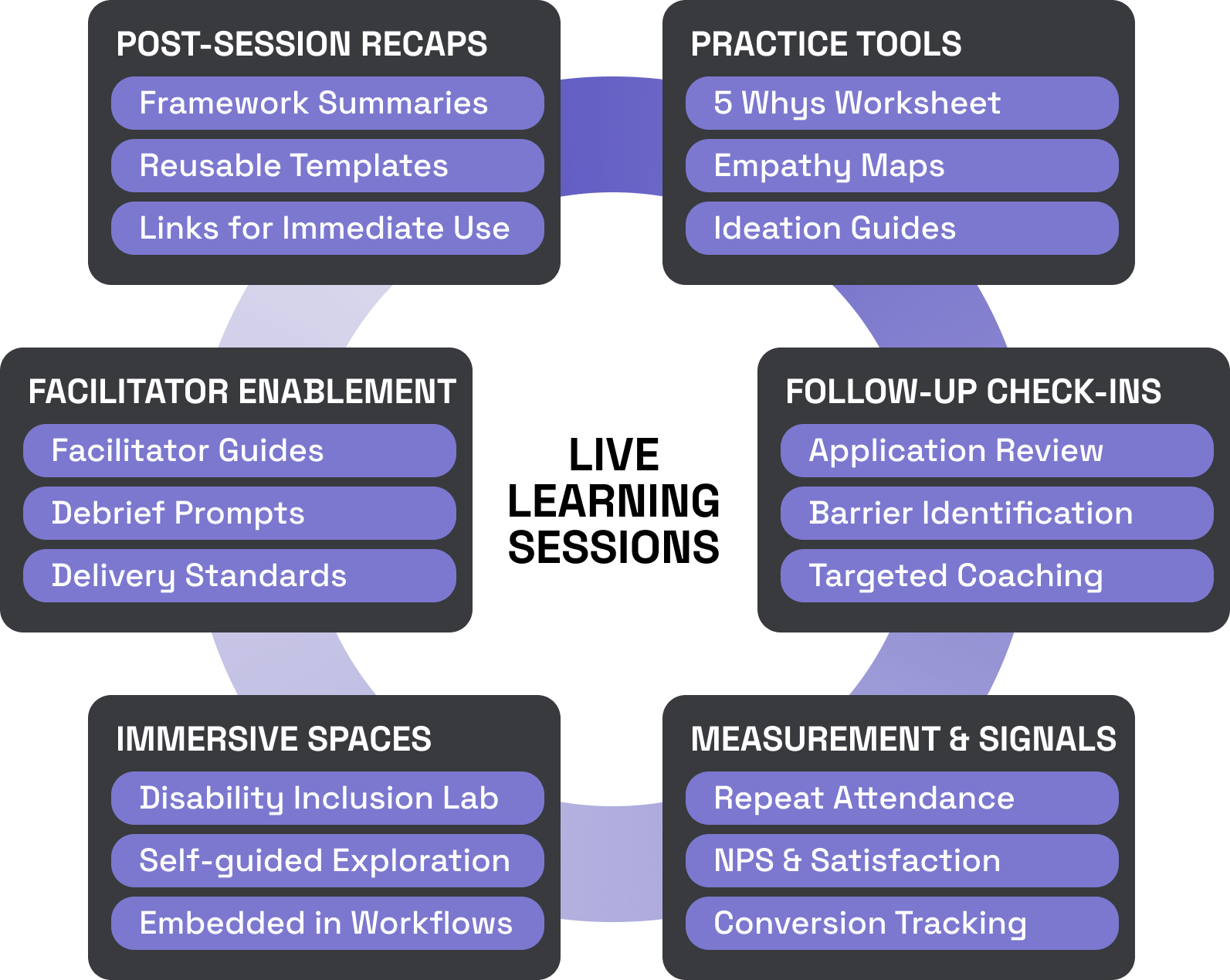
To avoid one-off training, I designed reinforcement directly into the learning system. The system combined:
Practice tools teams could reuse on real work
Post-session recaps that reinforced key frameworks
Facilitator enablement to preserve quality at scale
Follow-up check-ins to remove barriers to application
Lightweight signals to understand what was sticking
Why it mattered:
Together these mechanisms reduced dependency on facilitation and supported repeat, self-directed practice. 90 associates became sustained independent practitioners over a 6-month rollout.
Onboarding as Embedded Capability
The mechanism:
Designed and ran a monthly Design Thinking 101 workshop embedded in Sam's Club new hire onboarding. Every new hire cohort went through the same problem-framing framework within their first weeks on the job, before the day-to-day workload took over.
Why it mattered:
Embedding capability at the point of hire is the highest-leverage moment in any enablement program. Teams start from a shared foundation instead of catching up later.
Adoption proof:
Strong reviews from Sam's Club cohorts led HR to expand the program without being asked. Three distinct audience versions ran from the same curriculum architecture:
Sam's Club new hires, monthly recurring
Walmart Global Tech recent graduate new hires, 300+ attendees, version calibrated to their experience level
Associates Week, cross-role and cross-level, international audience, 150+ attendees


“All week the team said Jen's workshop was their favorite session of Associates Week. They have continually brought back the themes and discussed the impact of design thinking.”
Deena Oden — Senior Manager, Associate Experience, WalmartGenAI Adoption
The mechanism:
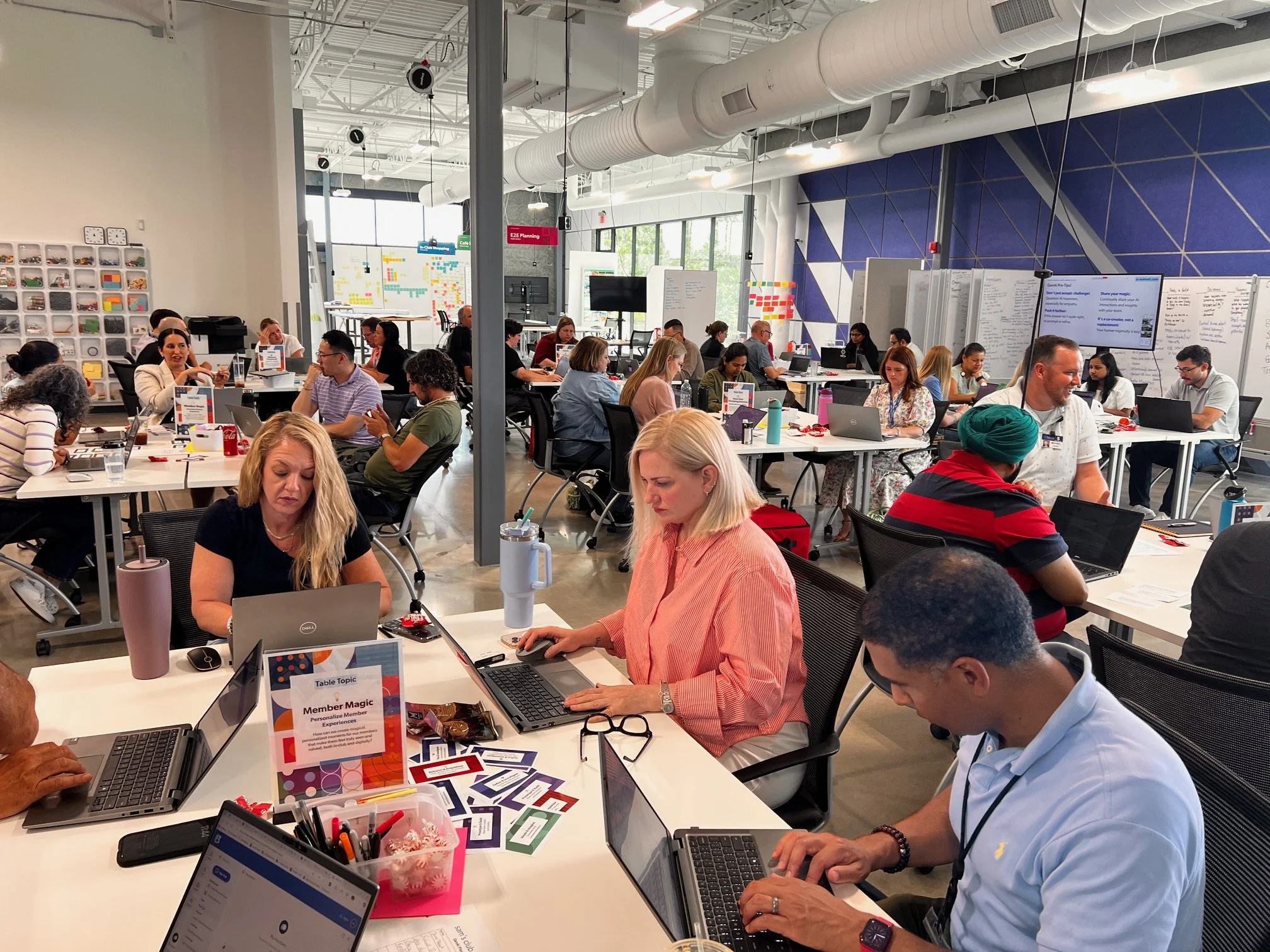
Noticed a consistent reaction to the AI exercise closing each design thinking workshop -- people wanted more, but had no structured way in
Built a program without a leadership directive, designed around curiosity rather than compliance
Participants self-selected to attend and chose their own interest group: associate experience, customer, data, or wild card
Strangers with shared problem domains found each other through the structure
Why it mattered:
Mandating AI use without giving people permission to explore it creates anxiety, not adoption. Letting people lead with problems they already cared about removed the barrier.
Adoption proof:
200+ associates trained across four sessions. One participant developed a concept and prototype in a single session that is now moving toward launch at Sam's Club.
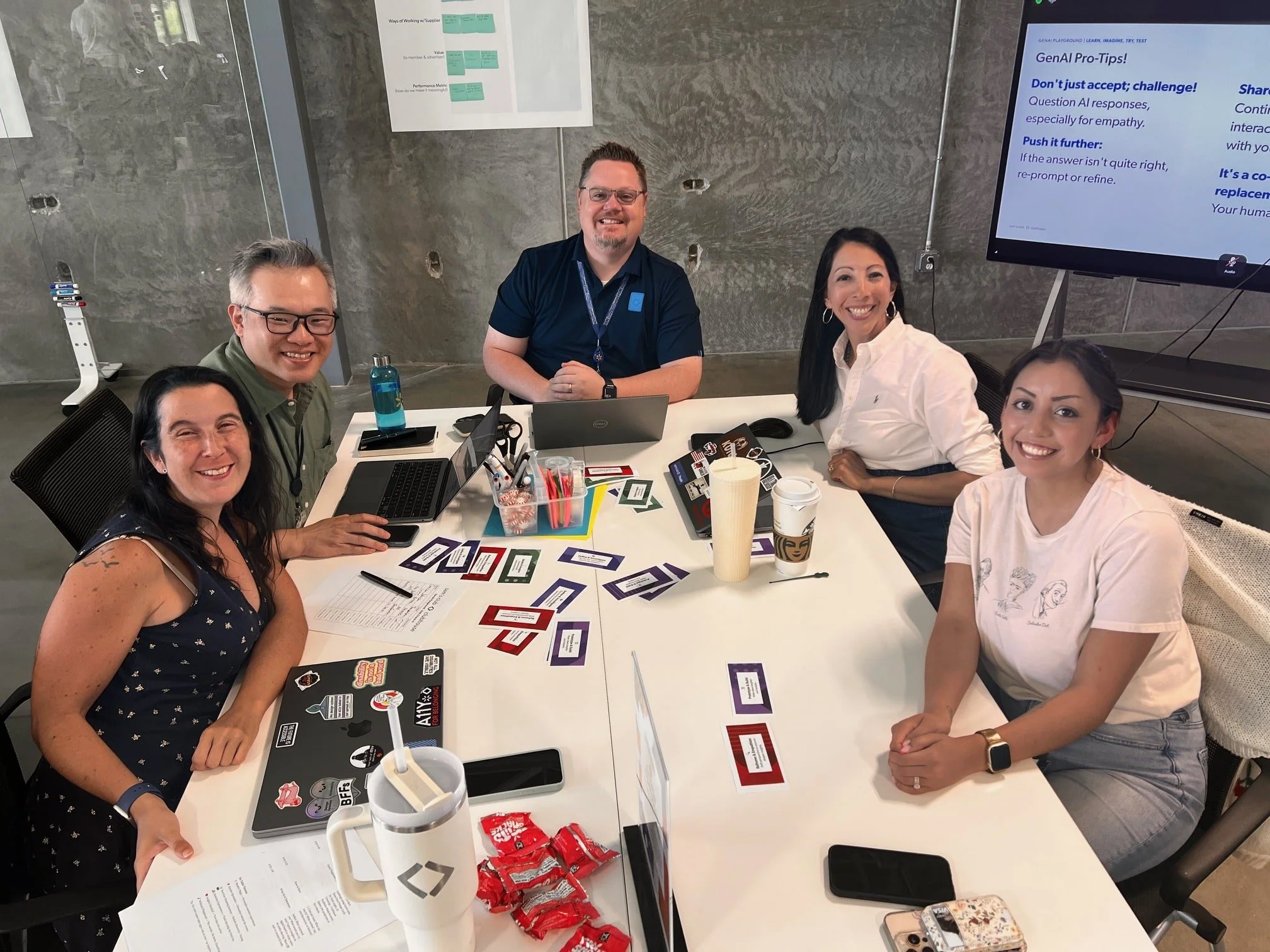

“Through Jen's guidance, the GenAI session shifted our thinking beyond simply serving existing members to exploring opportunities to actively convert new ones. It was a focused and inspiring experience that surfaced possibilities I hadn’t previously considered.”
Hao Li — Staff Product Designer, WalmartEnterprise Launch Catalyst
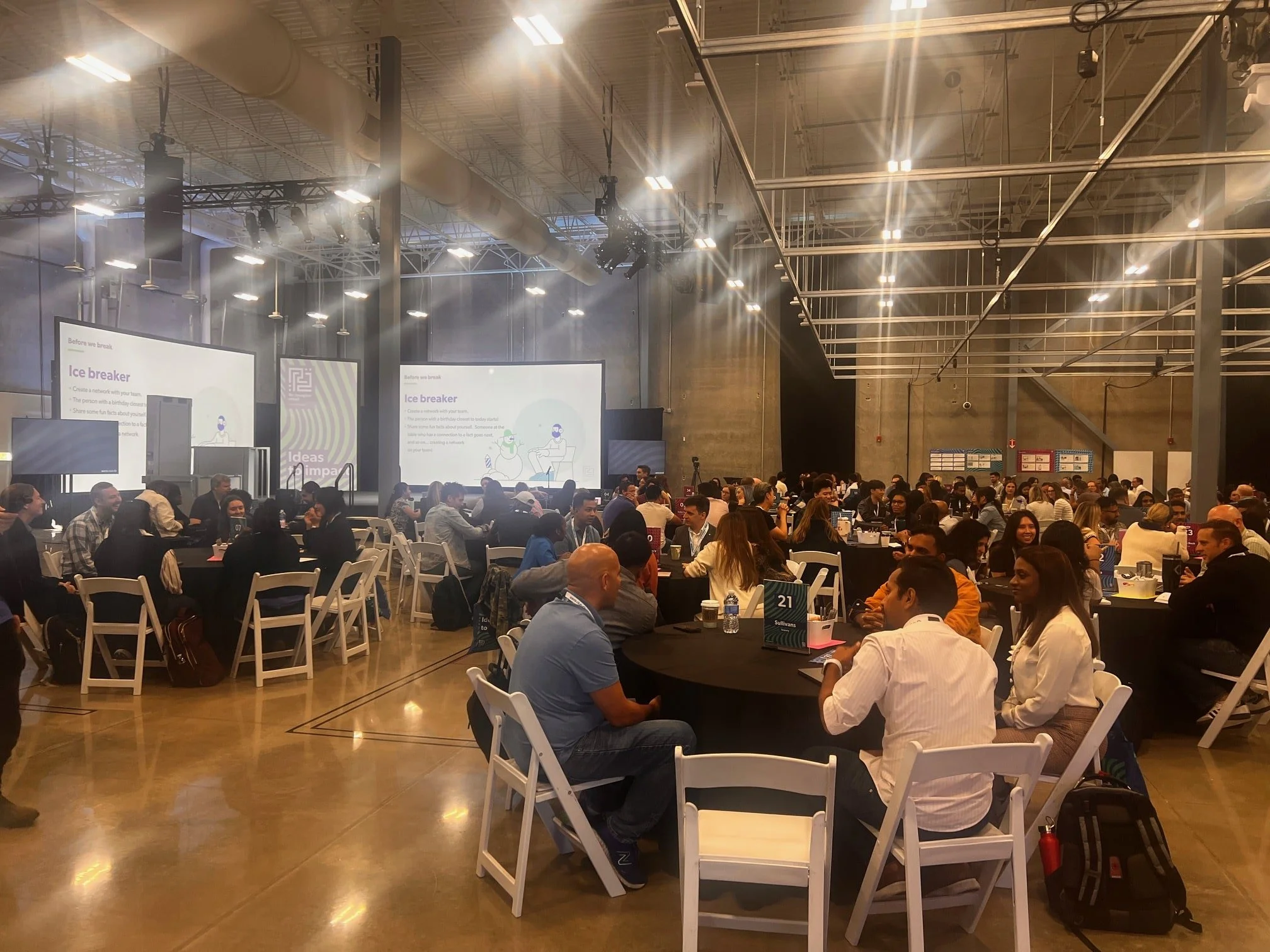
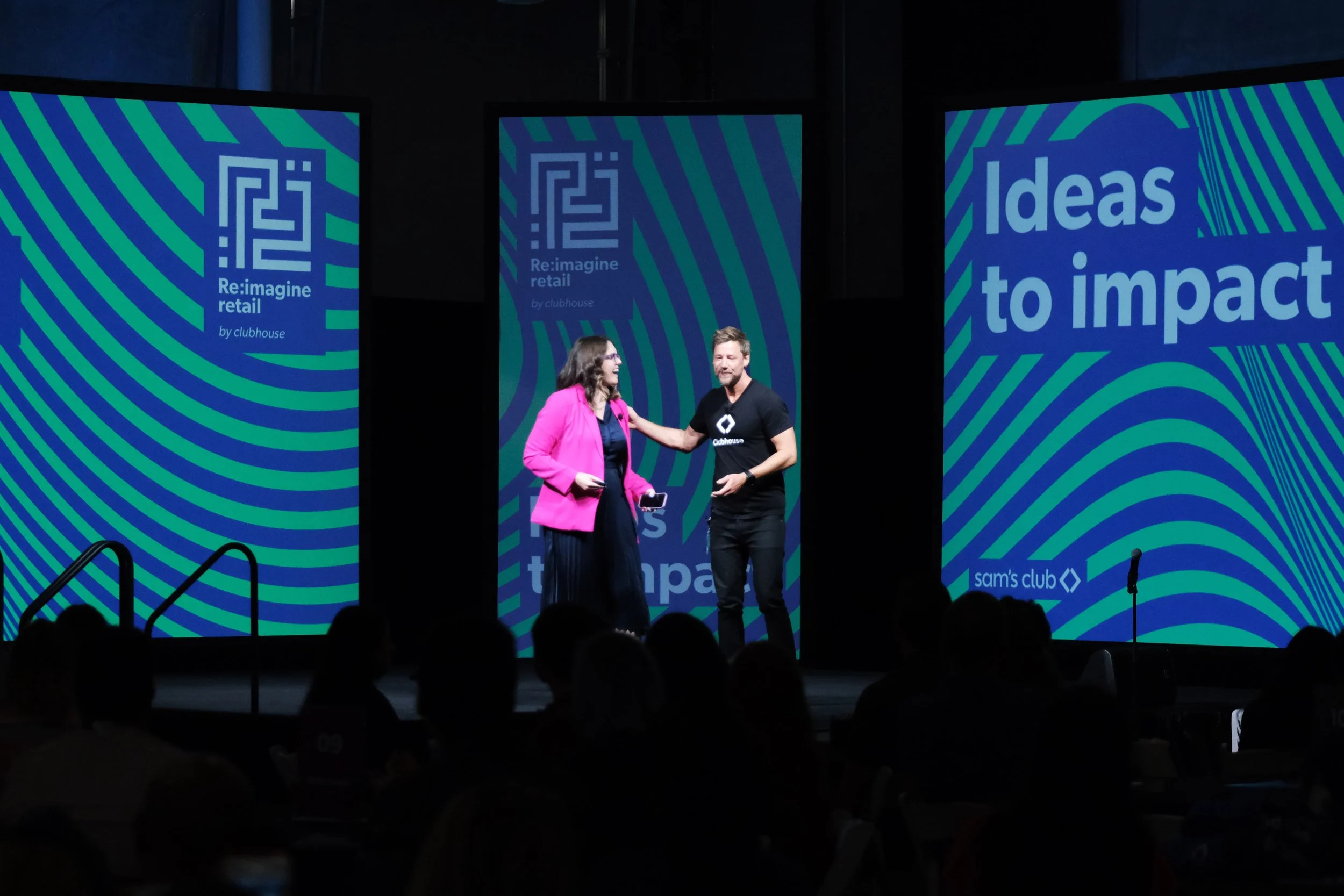
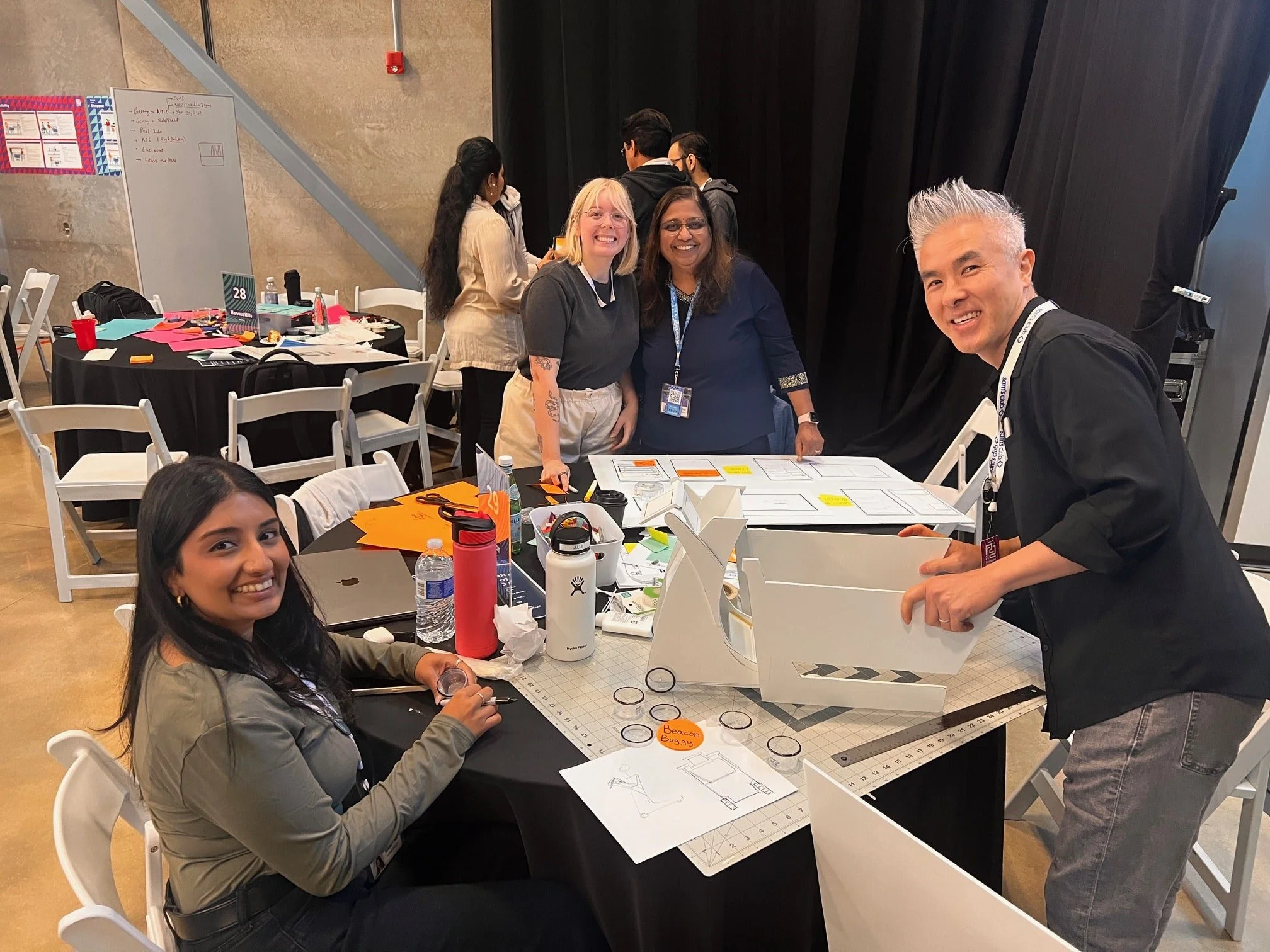
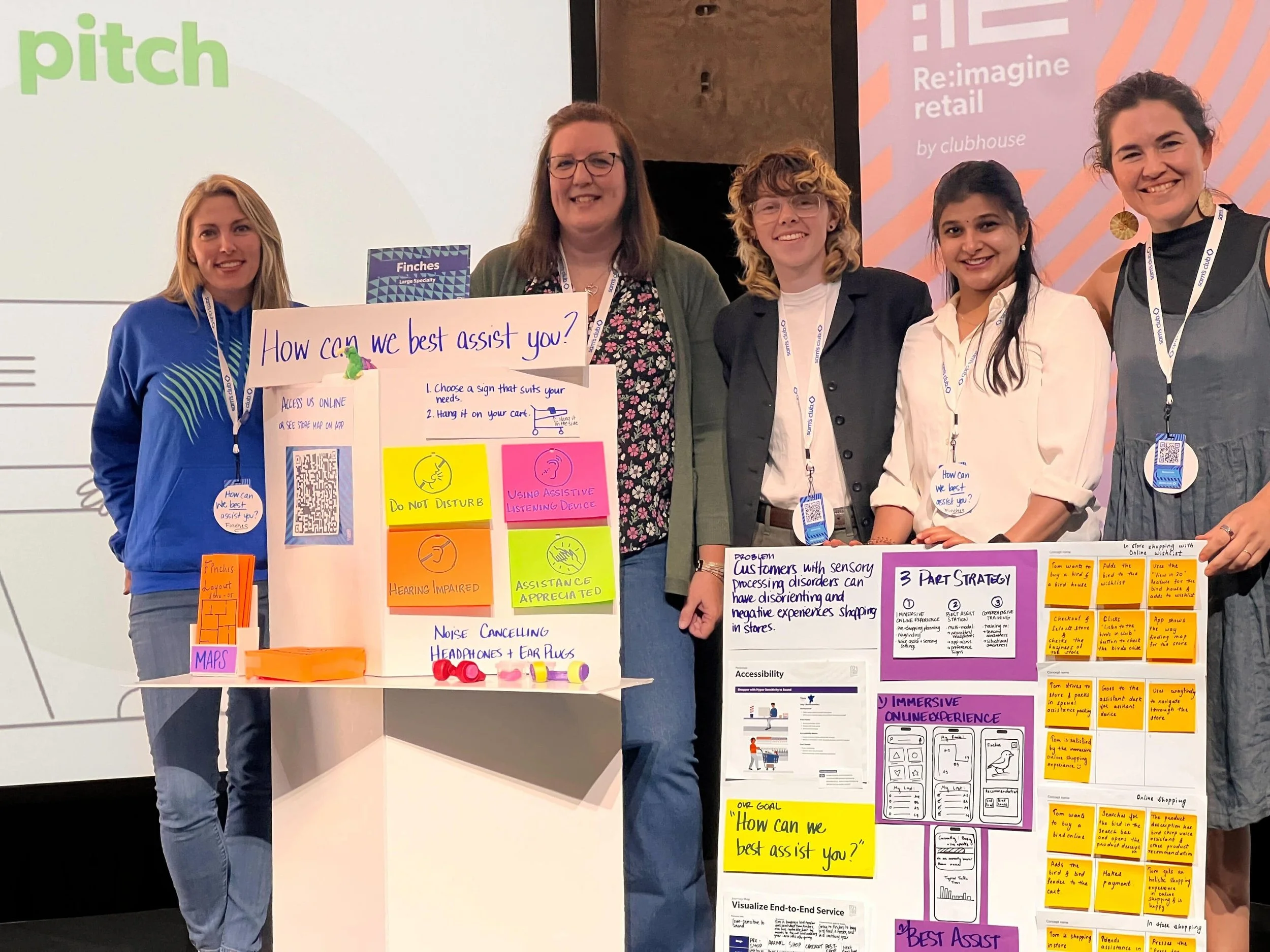
The capability program launched with a large-scale experience at the Re-Imagine Retail conference. I co-designed and facilitated a two-day session for 325 leaders, guiding 35 cross-functional teams through a structured design sprint using the same frameworks later taught in the program.
Five team ideas were selected as winners, creating early momentum and credibility that drove enrollment in the training that followed.
-
![Wide view of the Re:imagine Retail event showing a large room with dozens of cross-functional teams seated at round tables, with a stage and large presentation screens visible in the background.]()
35 Cross-functional Teams
-
![Conference emcee and a design leader stand on stage addressing an audience during a retail innovation event, framed by large branded banners.]()
Kicking Off Re:imagine Retail
-
![Design thinking exercise using Play-Doh and small building blocks to create duck prototypes on a table during a workshop.]()
Warmup Play-Doh Exercise
-
![Team prototyping an idea with foam core and paper materials during a workshop at the Reimagine Retail conference.]()
Team Prototyping Concept
-
![One of the winning teams presents a low-fidelity concept to improve the retail experience, standing beside display boards with sketches, notes, and accessibility-focused ideas.]()
Innovation Idea Winners

What Changed
Studio operations: Studio shifted from reactive facilitation to deliberate engagement, routing teams to the right support level rather than defaulting to full facilitation for every request.
Product teams: One product team cut exploration timeline 87% applying studio problem-framing methods. Problem-framing became standard practice before major initiatives. 90 associates continuing methods independently.
Leadership: C-suite gained data-driven visibility into innovation ROI. Studio shifted from service function to strategic capability.
Culture: Teams adopted a shared language for innovation work, shifting from request-based to problem-framing culture across the studio. The behavior change was not mandated so it spread.
What Scaled Forward
Measurement systems: NPS and conversion tracking adopted enterprise-wide for future studio initiatives.
Onboarding frameworks: Facilitator templates enabled continued delivery without the original facilitator.
Methods: Problem-framing now standard before major initiatives. Intake model embedded in innovation team onboarding.
GenAI adoption model: self-selected interest groups and problem-first framing used as the template for subsequent AI enablement across the studio.