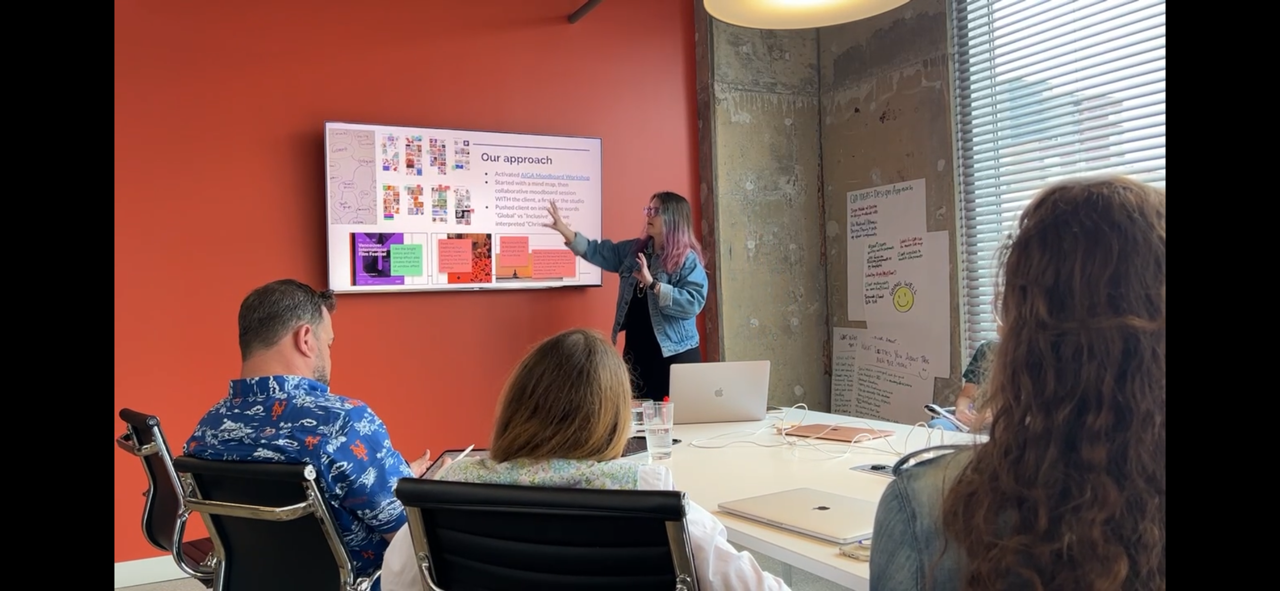

Built systems that outlasted seven years of growth, turnover, and market shifts
Role: Studio Operations
Scope: Founder transition, operational standardization, data-backed planning, sustained retention
Transformed founder-dependent delivery into sustainable studio operations. Teams made decisions, caught quality issues, and planned capacity without waiting for direction.
Impact at a Glance
-
90% team retention within 2 years
Career development frameworks and capability building sustained a 15-person studio through significant growth
-
80% reduction in client revisions
A 400-item quality standard gave teams consistent criteria to apply without waiting for oversight
-
125+ annual clients
Capacity planning and work routing sustained high-volume delivery without operational breakdown
-
![]()
Ricardo Lisboa - Creative Director, Glantz
“She taught me to slow down and narrow in. To be more selective with my decisions rather than burning through every possible option.
The processes she built for Glantz are still very much active, helping us honor and respect that flow.”
-
![]()
Keith Glantz - CCO & Founder, Glantz
“Hired into possibly the hardest role at my organization. She didn't just maintain the quality we had; she genuinely elevated it. She fostered an incredibly positive and productive environment, consistently helping her direct reports grow their skills and take on new challenges.”
-
![Woman with short brown hair and green shirt.]()
Lisa Henthorn - Corporate Communications and Marketing Executive, Client
“She expertly manages competing stakeholder opinions and encourages teams to step outside comfort zones.
Though you may initially retain Jen for a short-term project, you'll quickly discover she's a long-term play."
-
![]()
Anne Weber - Account & Operations Leader, Glantz
“She pushed the creative to be smarter and sharper. She pushed the culture to be more collaborative and more fun.
We hired her to run the studio and then promoted her to the Leadership Team."
-
![]()
Brooklyn Guan - Web Developer, Glantz
"She brought more structure to all aspects of work, and also a lot of fun to the office.
She never runs out of creative ideas and passion for improving things."





The Problem
Glantz was winning larger, more complex projects, but had no systems to prevent bottlenecks, manage client expectations, or ensure consistent quality at scale.
None of it could be mandated. The systems had to earn adoption on their own.
What was breaking
No visibility into team capacity or utilization
Quality inconsistency across 125+ annual clients
Client revisions consuming 30%+ of project time
Reactive resourcing causing team burnout
Designers hitting skill ceilings with no clear path forward
Studio services falling behind what clients actually needed
The Decision That Mattered
How do you scale a studio without losing what made the work good?
What I Built
Work Routing and Studio Assignment
The mechanism:
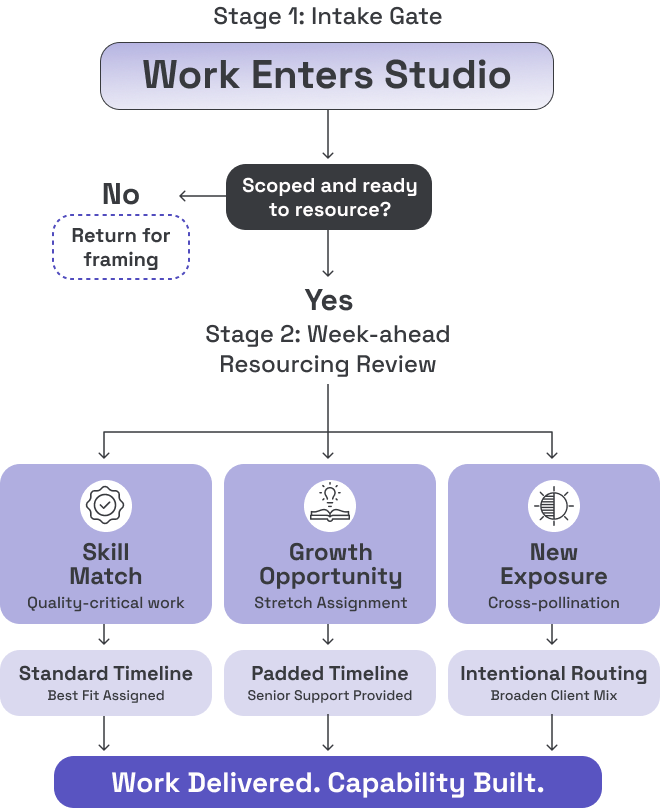
Built intake model separating strategic from executional work, ensuring requests were scoped before resourcing began
Assigned work against three criteria reviewed every Friday: skill match for quality-critical deliverables, growth opportunity for designers ready to stretch, and new exposure for cross-pollination across client types
Padded timelines for growth assignments with senior support provided, either through direct CD oversight or paired senior designer, to build skill without sacrificing delivery
Surfaced overlapping team efforts through intake review, reducing duplicated work across the portfolio
Why it mattered:
Work went to the right person for the right reason
Expertise was protected where quality was non-negotiable
Growth was built into the week's resourcing plan, not left to chance
Adoption proof:
The routing system changed how work was staffed and why. Assignments were intentional, not just whoever was available. Partners engaged earlier and trusted the framing process before submitting, which meant the studio influenced direction at every level, including up.
Capacity Planning and Utilization Tracking
The mechanism:
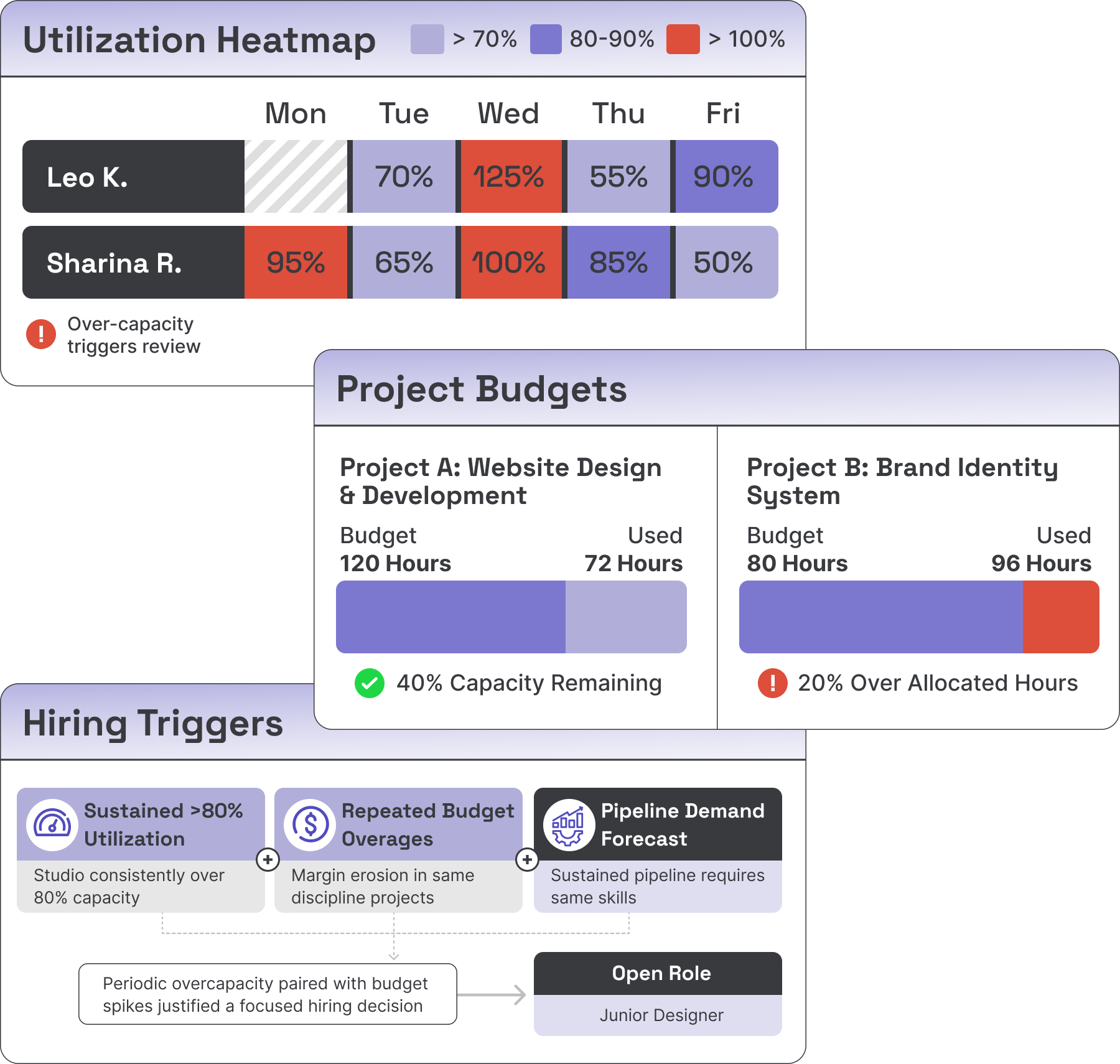
Tracked weekly utilization across the 15-person team
Billable hours by project and non-billable time across internal systems and business development
Weekly operations review reported utilization and demand trends to studio leadership
Why it mattered:
Eliminated reactive resourcing
Leadership could see bottlenecks forming before they caused delays or burnout
Branding and concepting work was chronically under-budgeted because PMs could not see the non-linear time those phases actually require
Capacity planning gave that invisible work a number
Adoption proof:
Studio sustained operations through market shifts, adjusting capacity to demand without over or under-hiring. Timesheet accuracy improved significantly, reducing billing discrepancies across 125+ annual clients
Quality Standards and Review Systems
The mechanism:
The checklist came from watching what broke in crits and client reviews. Rounds of feedback, design-to-dev inconsistencies, and scope creep from under-budgeted concepting cycles. It codified what experience already knew.
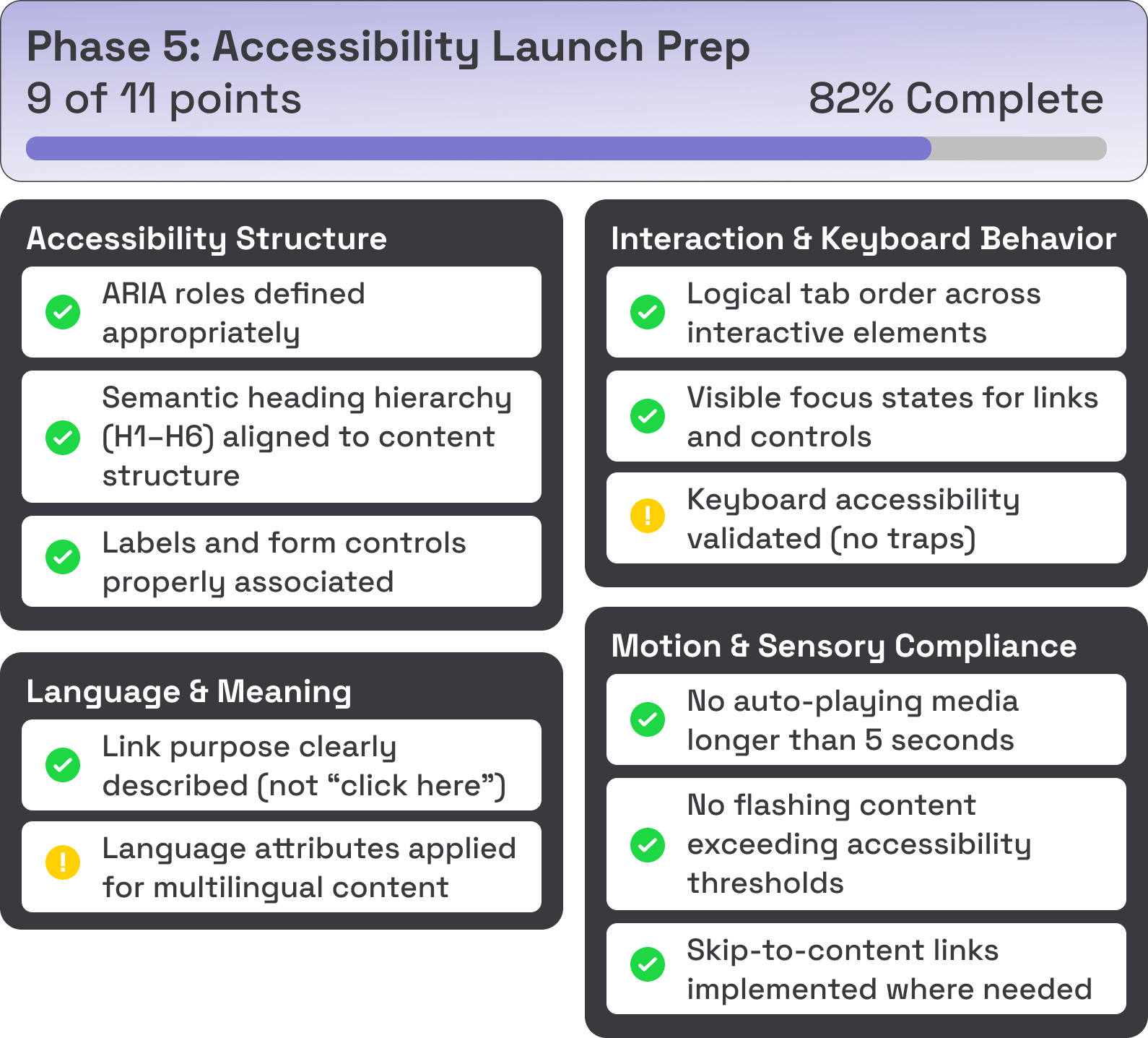
Built 400-item quality checklist across milestones
Accessibility compliance (WCAG 2.1 AA)
Browser and device compatibility
Content structure and hierarchy
Design system consistency
SEO and performance standards
Why it mattered:
Designers and developers caught issues before client review
Reduced late-stage rework and emergency fixes
Adoption proof:
80% reduction in client revisions. Checklist still in use, now maintained by team.
The systems created capacity. Developing people is what made them last.
UX Practice and Capability Building
The mechanism:
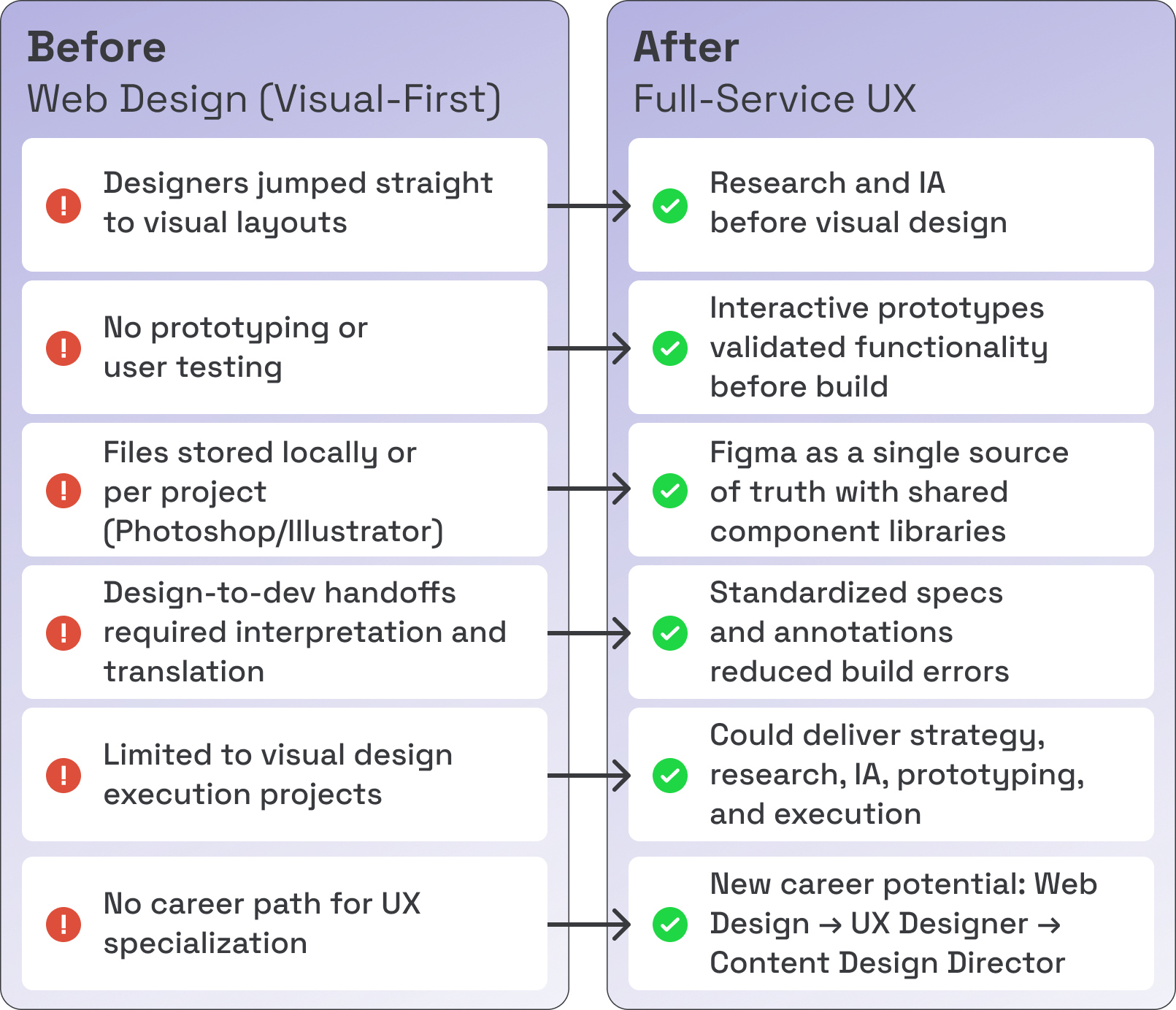
Web designers were skilled but not working at the level they were capable of
Introduced research, prototyping, and IA before visual design
Migrated to Figma with shared component libraries
Strategically hired senior UX talent to fill capability gaps
Established career paths for UX specialization
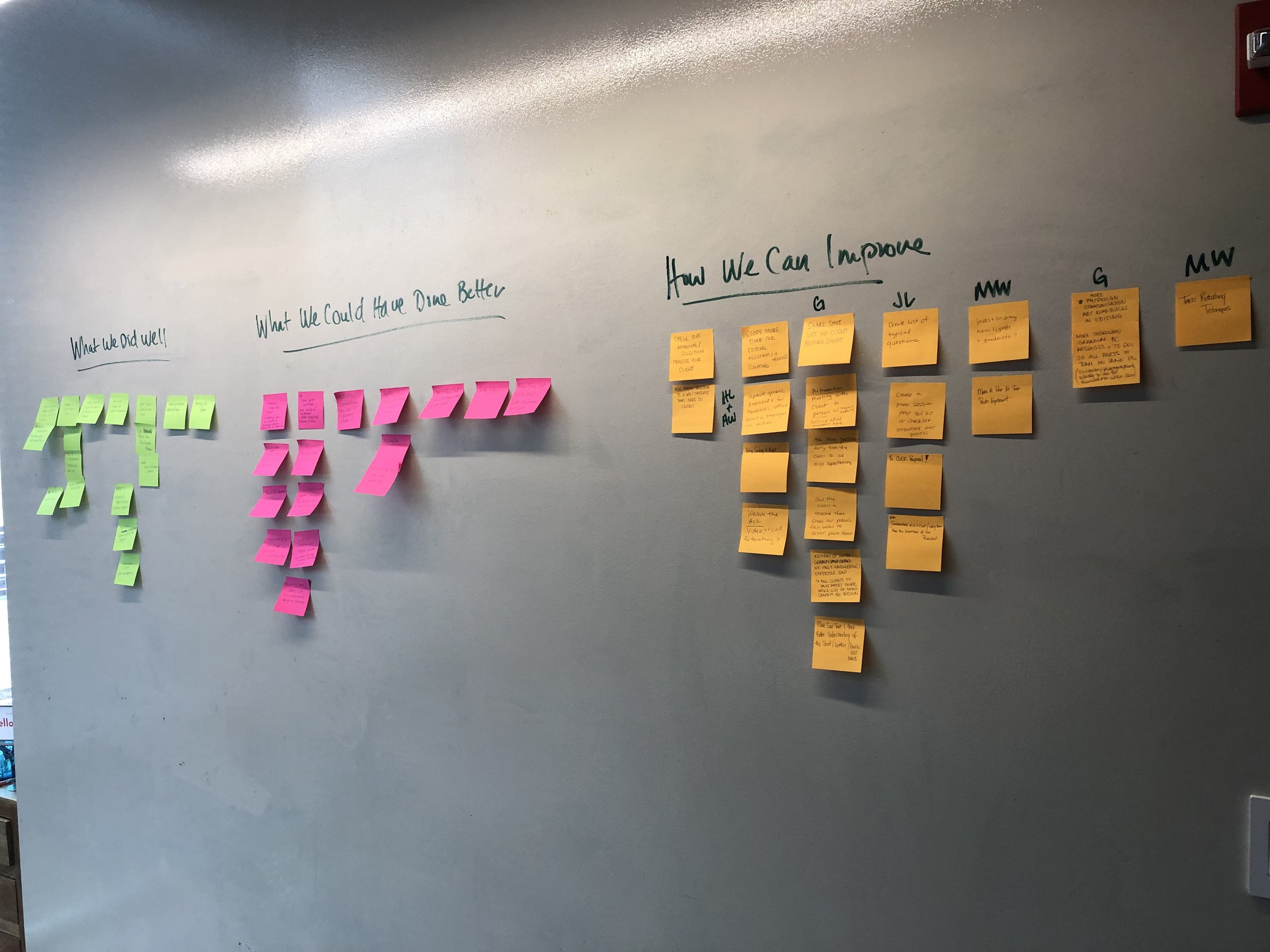
Introduced cross-discipline crit format where designers presented decisions first, then each person named one thing working and one thing not, nothing repeated, developers and PMs included
Why it mattered:
Studio expanded from visual-first web design to full-service UX
The gap was visible in how designers talked about their work: solutions before problems, layouts before flows
Teams could solve harder problems and command higher project value
The crit format changed how the team gave and received feedback across disciplines
Issues surfaced earlier and with more specificity because everyone in the room had a voice and a structure for using it
Adoption proof:
Designers who previously jumped to layouts led discovery and prototyping. By the time feedback reached me in the crit rotation, the room had flagged most issues already. One UX designer progressed to a new role: Creative Director leading Content Design.
Career Development and Retention
The mechanism:
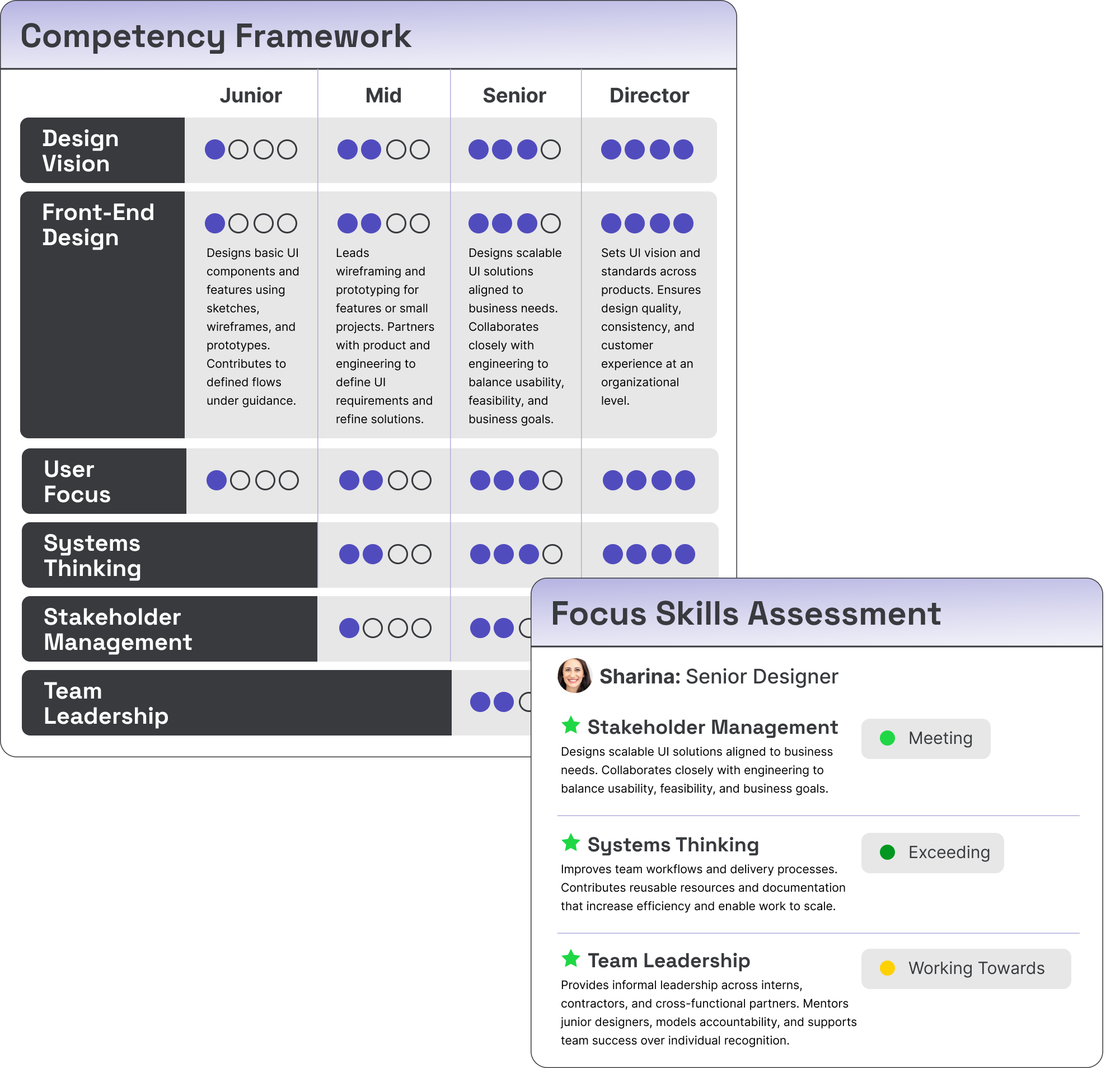
Defined career progression criteria from IC to leadership
Skill development plans tied to project assignments
Quarterly growth conversations separate from performance reviews
Skills framework built using AI-assisted mapping across design, engineering, and project management
Built role-specific onboarding documents with a peer-contributed "what I wish I knew" section, making the why behind how people work visible from day one
Sourced multiple hires directly from AIGA Chicago and SheSays community networks
Why it mattered:
Team members saw a path forward
Studio could promote from within instead of always hiring externally
Adoption proof:
90% retention within two years. Team capability compounded rather than reset with turnover. Designers referred peers, stayed through market downturns, and grew into leadership. Retention was the outcome. Culture was the mechanism.
What Changed
Decision velocity increased: teams evaluated scope and estimated timelines without a leadership bottleneck
Studio expanded its service offer: UX strategy, IA, and research-informed design became core capabilities, not gaps
Quality became predictable: consistent work regardless of which team members were assigned
Hiring became strategic: resourcing decisions based on capacity data, not panic
Team capability compounded: 90% retention meant institutional knowledge grew instead of resetting
What Scaled Forward
Quality checklist: Maintained by team with quarterly updates
UX practice: component libraries, Figma standards, and career paths for UX specialization carried forward independently by the team
Capacity and routing models: adopted by leadership for hiring decisions and incoming work prioritization
Career frameworks: team leads operated independently making it part of review process