Building platform clarity after a merger
Role: Experience Strategy Lead & Creative Director at Glantz
Scope: Three brands, a unified platform, enterprise positioning, $185M acquisition
Executive Partner: Chief Product & Marketing Officer
Unified three legacy organizations into a coherent platform brand, building the narrative and design systems that enabled enterprise positioning and acquisition.
Impact at a Glance
-
6-year evolution
From merger launch through $185M acquisition
-
57% form lift
Conversion-focused redesign raised form completion from 7% to 11%
-
80% efficiency gain
Modular design system reduced custom design request turnaround
-
Enterprise positioning
Platform narrative became acquisition differentiator
The Problem
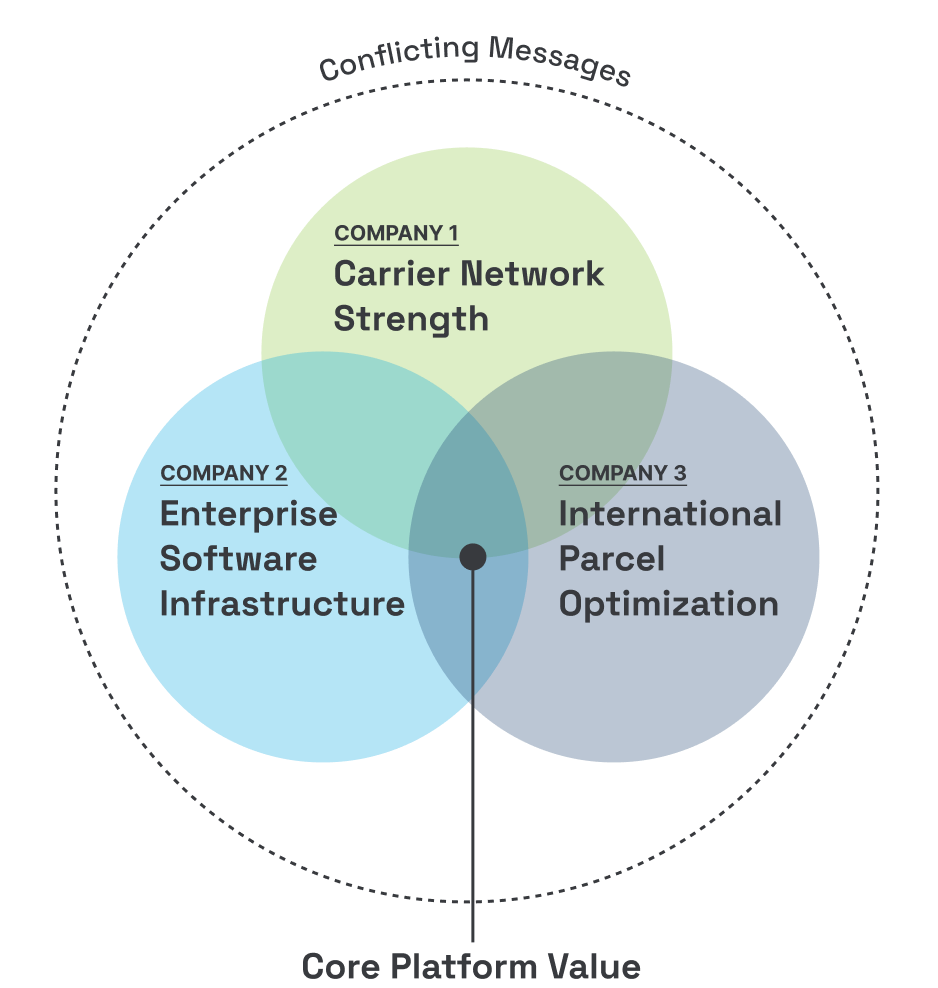
Logistyx was formed through the merger of three shipping technology companies. Each legacy organization had distinct strengths, customer bases, and positioning language.
Without unified direction, sales narratives diverged and the full platform value was unclear.
What was at risk:
Fragmented messaging diluting market position
Sales teams competing internally rather than selling unified platform
Loss of enterprise credibility in competitive market
Missed acquisition opportunity due to unclear positioning
Key Decisions & Trade-offs
The critical question:
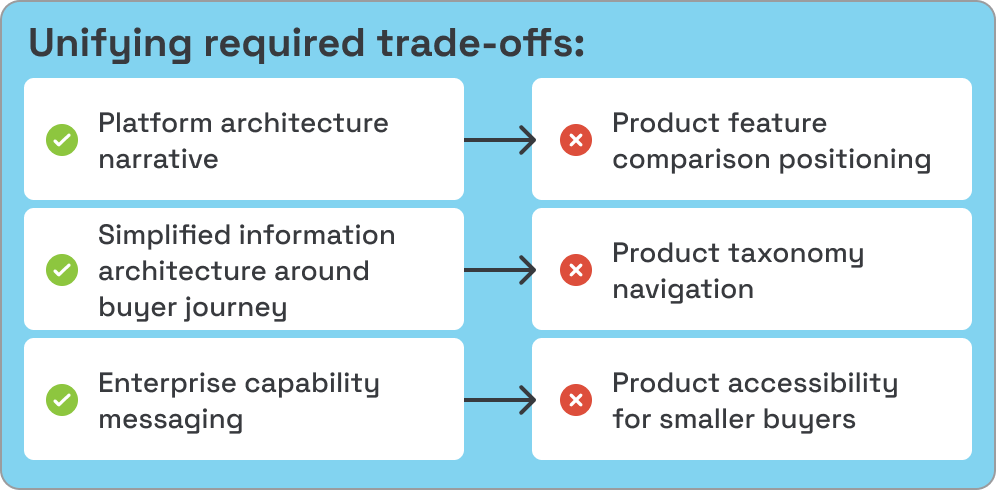
Would Logistyx operate as three products sharing a logo, or as a unified execution platform with integrated ecosystem value?
Real constraints shaped the decision:
Existing customers tied to legacy brands
Sales teams accustomed to product-specific selling
Platform integration still in progress
Tight timelines to establish market credibility
The organization chose platform clarity. My role was designing the structure that made that choice operational.
What I Led
I owned experience strategy and creative direction end-to-end, partnering with executive leadership to align cross-functional teams.
Phase 1: Merger Launch
Brand positioning and naming:
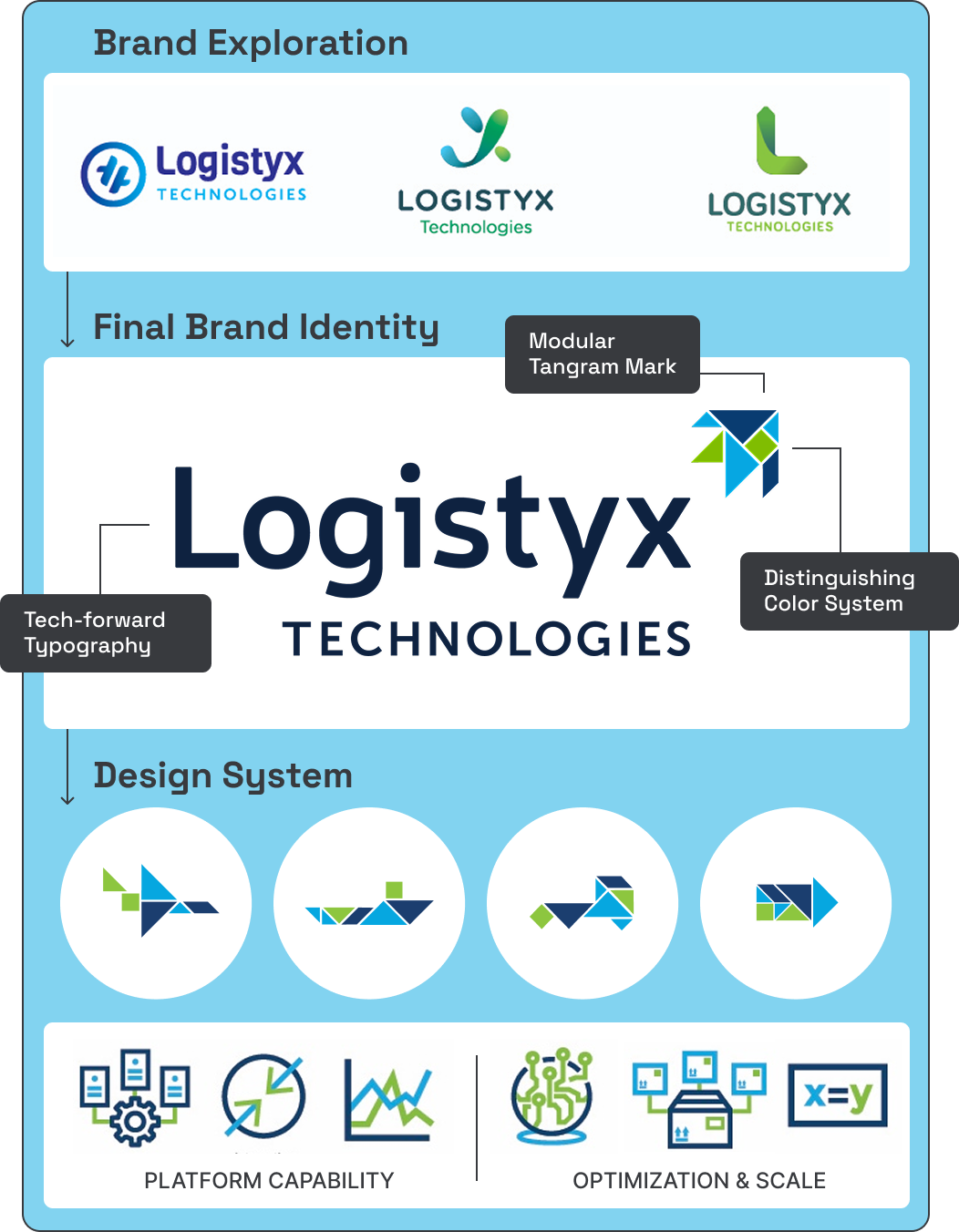
Led naming strategy, developing "Logistyx" to signal thoughtful logistics execution with systematic platform capability
Positioned as unified execution platform rather than three separate products
Visual identity:
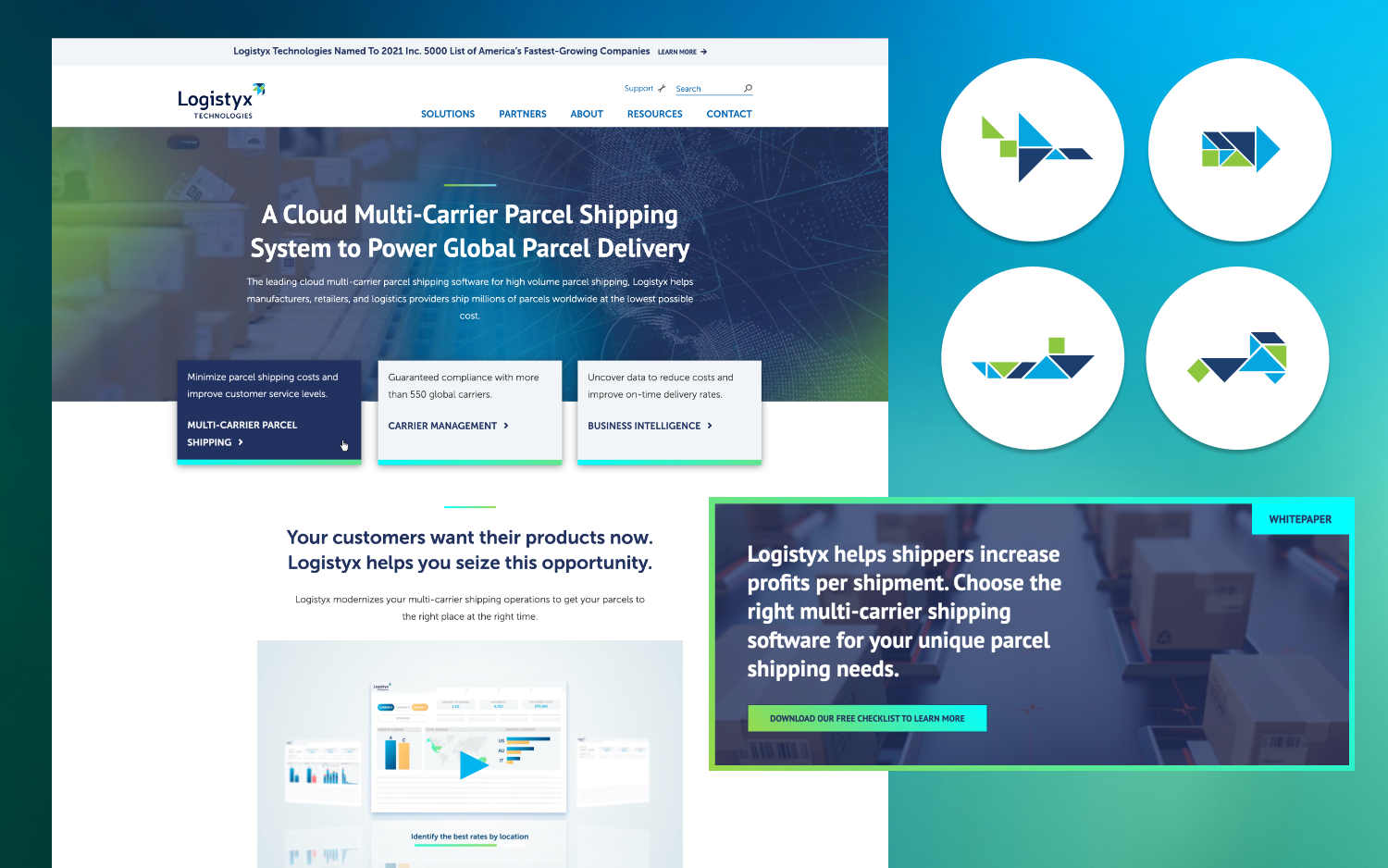
Modular tangram logo in arrow shape, designed to transform into supporting shapes telling the brand story
Color system of bright green and cyan for innovation, anchored by trustworthy dark blue
Typography and design aesthetic is tech-forward, moving beyond legacy enterprise software
MVP website strategy:
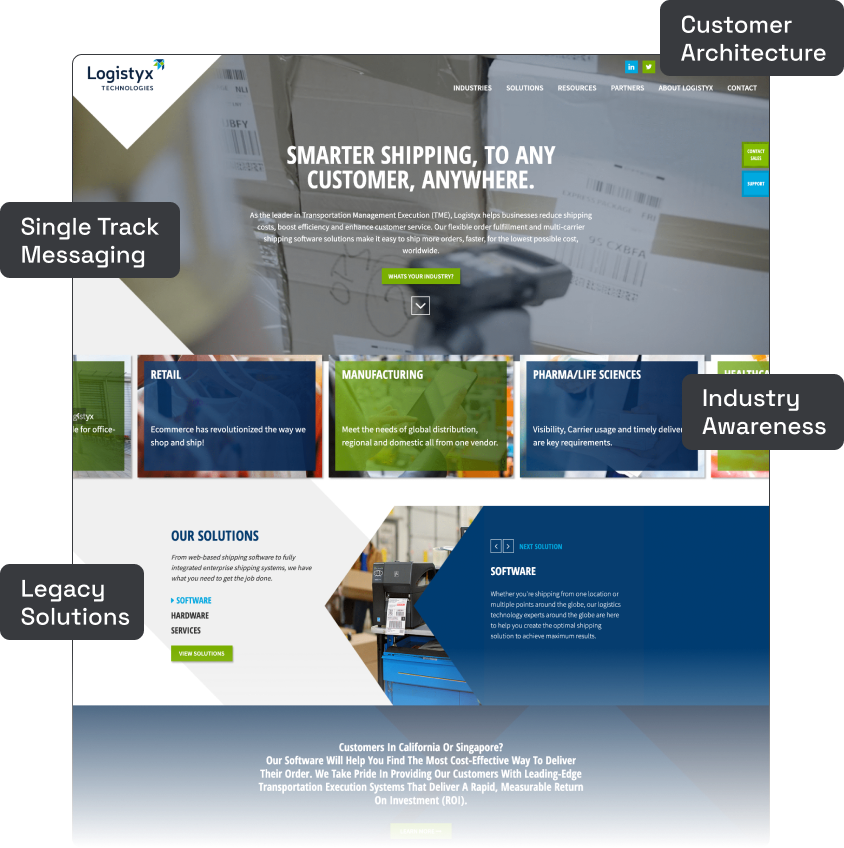
Homepage emphasized industries served
Messaging focused on platform stability during customer transition
Information architecture organized around industries and legacy product familiarity
Phase 2: Platform Maturity
Strategic evolution:
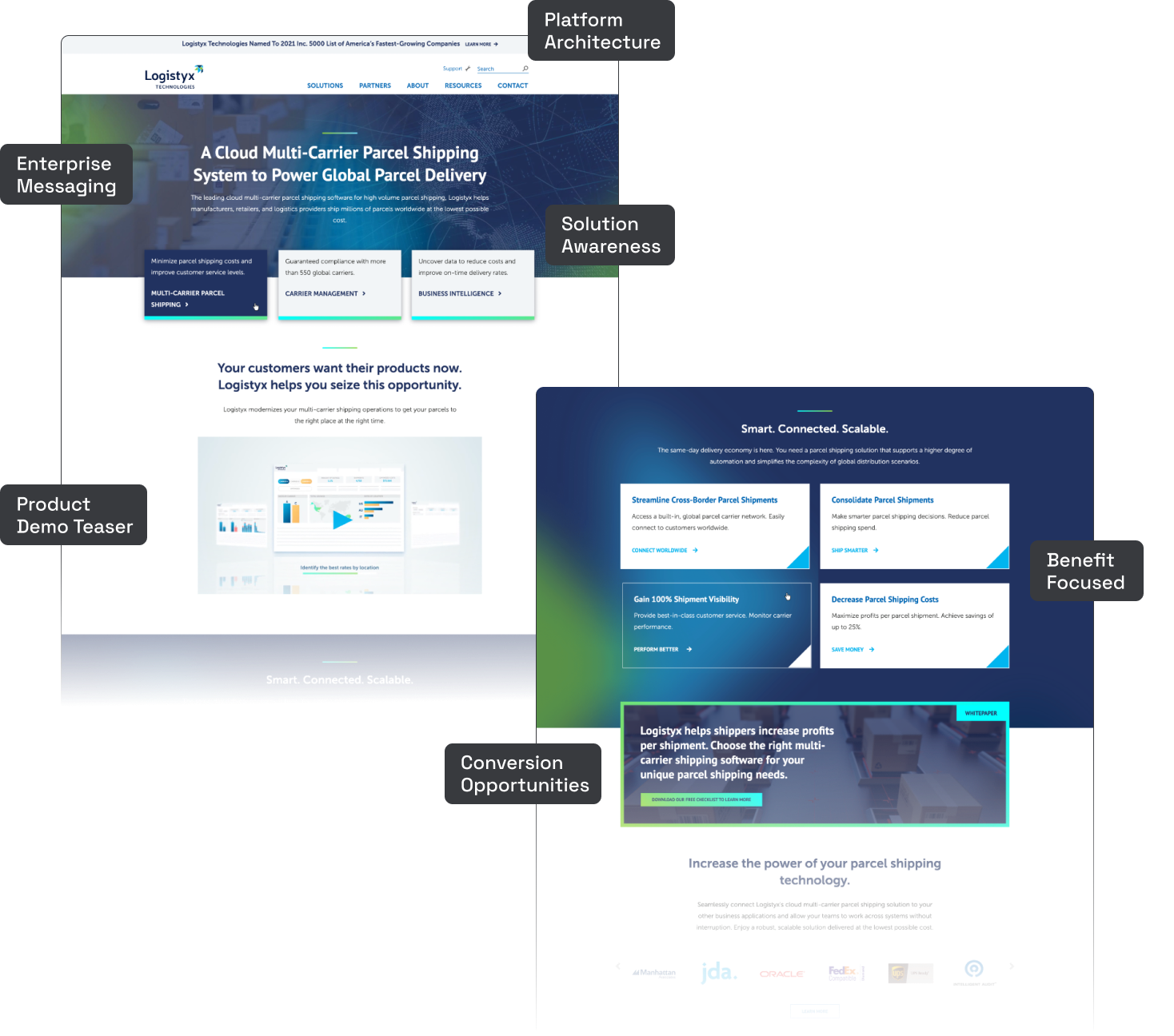
Positioning shifted from industry-focused to comprehensive platform benefits as SaaS capability matured
User research revealed messaging traction and drop-off points, informing content and navigation strategy
Design system evolved to maintain differentiation as competitors copied brand elements
Information architecture and UX:
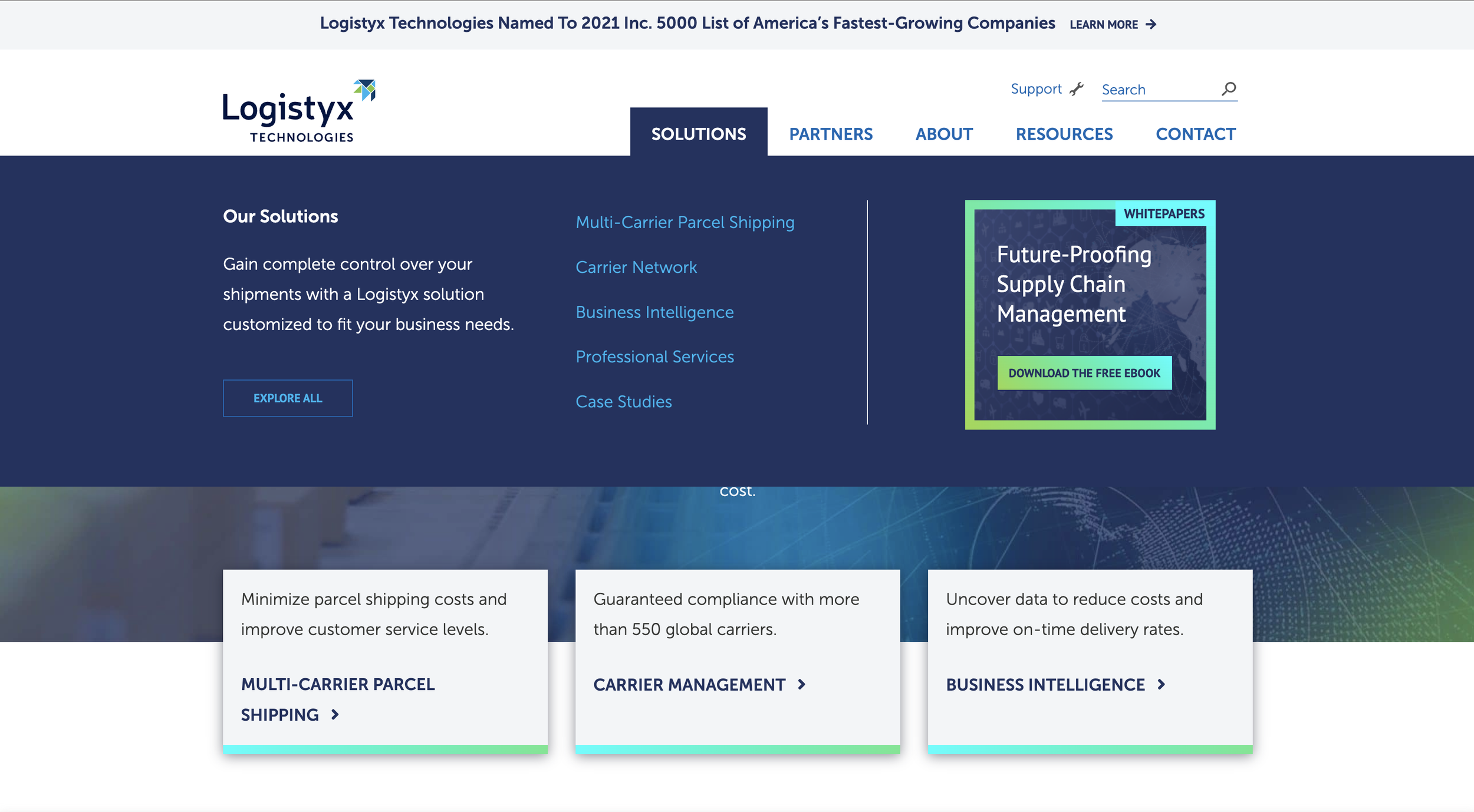
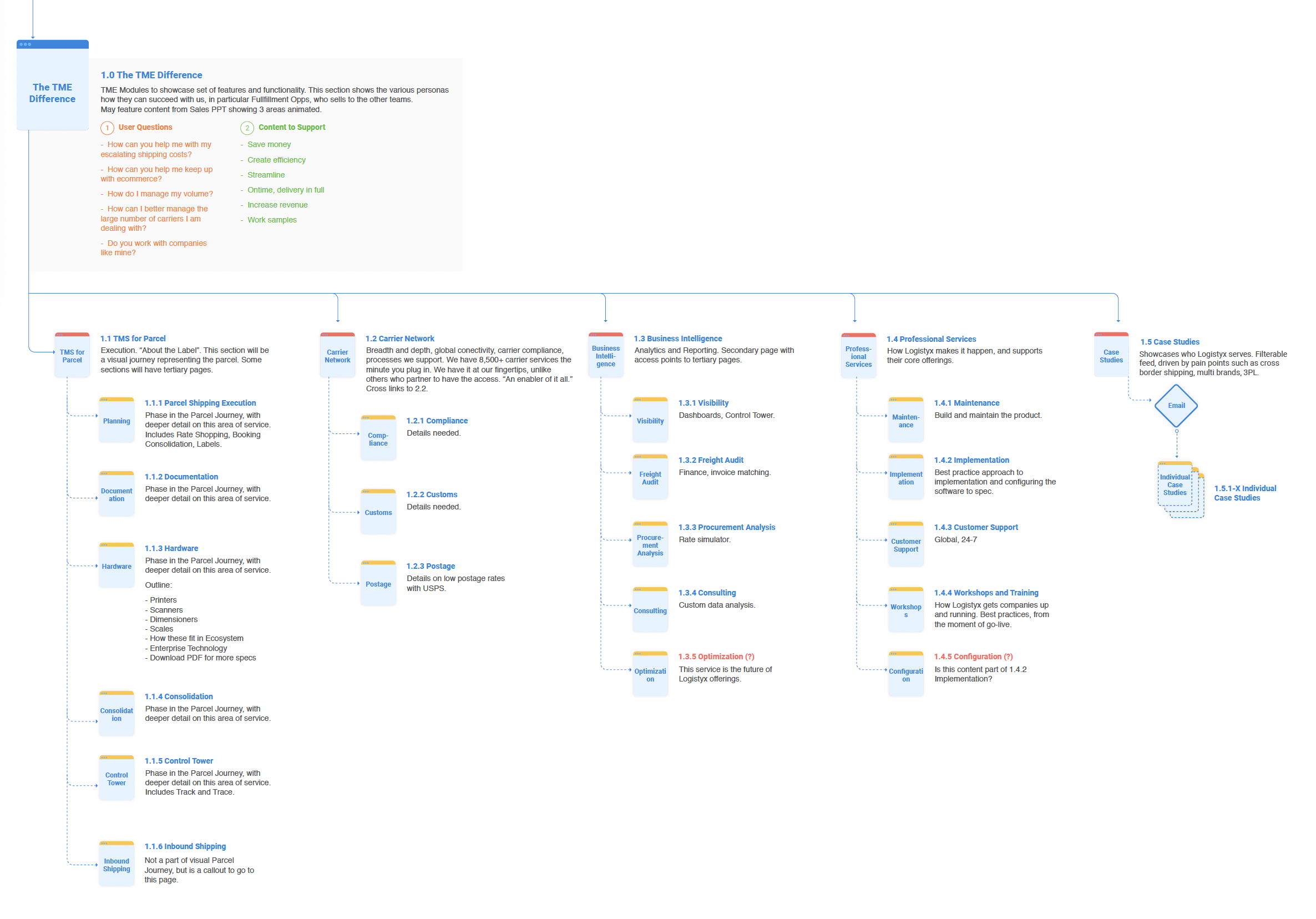
Streamlined navigation from 6 to 5 sections based on user behavior, restructuring content across site
Homepage reorganized around buyer journey and benefit-driven outcomes
Introduced product demonstration video showcasing platform intelligence
Reduced animation complexity for page load speed and accessibility
Visual system updates:
Expanded component library with increased gradients and bright color usage
Typography evolved to humanistic headlines for accessibility
Reduced tangram usage in web design, maintained as strategic marketing element

Lisa Henthorn, VP of Marketing and Communications, Logistyx Technologies
“From brainstorm to launch, Jen expertly manages competing stakeholder opinions and is a champion for excellence every step of the way.”
Outcomes
Phase 1: Merger Launch
Sales conversations shifted from product features to platform capability
Marketing and product teams aligned under unified narrative
Sales decks consolidated from 3 product-specific presentations to 1 platform deck
Lead quality improved (marketing reported better-qualified enterprise inquiries)
Phase 2: Platform Maturity
Benefit-driven messaging improved engagement and qualified lead conversion
Navigation streamlining reduced user friction and improved conversion paths
Design system enabled cross-functional marketing autonomy
Platform narrative became acquisition differentiator during due diligence
Long-term: Logistyx was acquired by e2open for $185M. While acquisition outcomes depend on many factors, the unified platform narrative and experience system contributed to enterprise positioning and acquisition readiness.