

Unifying a product story under pressure
Role: UX Strategy Lead & Creative Director at Glantz
Scope: B2B Healthcare SaaS, website launch and platform narrative
Stakeholders: CEO, CMO, CPO, Sales, Content, Design
Helped a divided leadership team align on what their platform stood for, then built the experience to prove it.
Impact at a Glance
-
115% conversion increase
Website overhaul drove measurable pipeline growth for Verato's enterprise launch
-
2.3X pipeline growth
Unified product narrative converted skeptical healthcare enterprise buyers
-
6-week delivery
Full experience strategy and creative direction executed in weekly agile sprints
-
C-suite alignment
Five competing stakeholder groups aligned on one product story before design began
The Problem
Verato had a strong product and a real market position. What they didn't have was a shared story about what to lead with.
Verato was entering a crowded healthcare data market at a moment when buyers were consolidating vendors and scrutinizing new entrants carefully. Getting the launch story wrong wasn't just a marketing risk. It was a sales risk.
Each leadership group had a different answer. The CMO wanted to lead with industry authority. The CPO wanted to lead with product capability. Sales wanted proof points. Every call surfaced ten or more stakeholder voices with no shared definition of value. With a firm launch deadline and no center of gravity, the website couldn't do its job: convert skeptical enterprise buyers across healthcare systems, insurance firms, and hospitals
What was at risk:
Leadership teams were optimizing for internal priorities, not the buyer's decision journey
A 30-plus page persona deck that fragmented internal alignment on who the platform was even for
No shared framework for translating technical and regulatory complexity into customer-facing language
A product launch deadline with no alignment on what to say first
What buyers actually experienced:
A fragmented site structure with overlapping sections that made it difficult for CIOs, marketers, and clinical leaders to find what they needed
A customer journey requiring multiple paths to piece together value, since the site wasn't organized around how each audience actually made decisions
Internal teams interpreting the offering differently, creating inconsistent messaging and content across the site before any redesign began
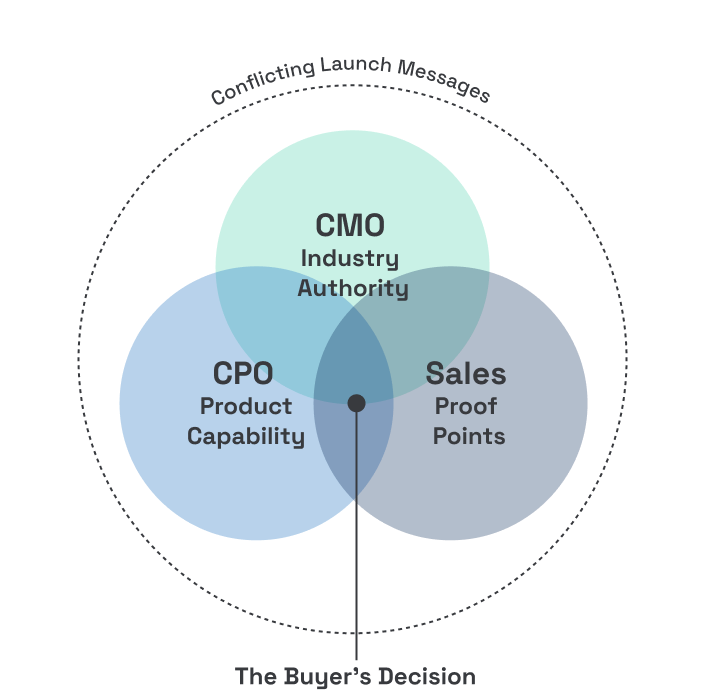
Key Decisions & Trade-offs
The strategic question wasn't what to include. It was what to lead with. Should we lead with what the platform does, or what it makes possible for buyers?
Verato's platform handles identity data management, a technically dense capability that means different things to a CISO, a CMO, and a clinical operations lead. Choosing the lead message meant deciding whose problem we were solving first.
Decision: lead with trust, not technology.
Frame every page around buyer outcomes: accurate patient identity, reliable data, confident decisions
Deprioritize product-led language in favor of outcome-led language mapped to how enterprise healthcare buyers evaluate risk
Hold this decision as a quality filter across every page, every navigation label, and every stakeholder review
Decision: resolve through criteria, not consensus.
Shift the conversation from personal preference to purpose, grounding every naming and hierarchy debate in user needs and SaaS pattern precedent
Establish clear criteria for what mattered most on each page before revisiting layout options
Use this criteria-first approach as the mechanism that unlocked forward motion once alignment stalled
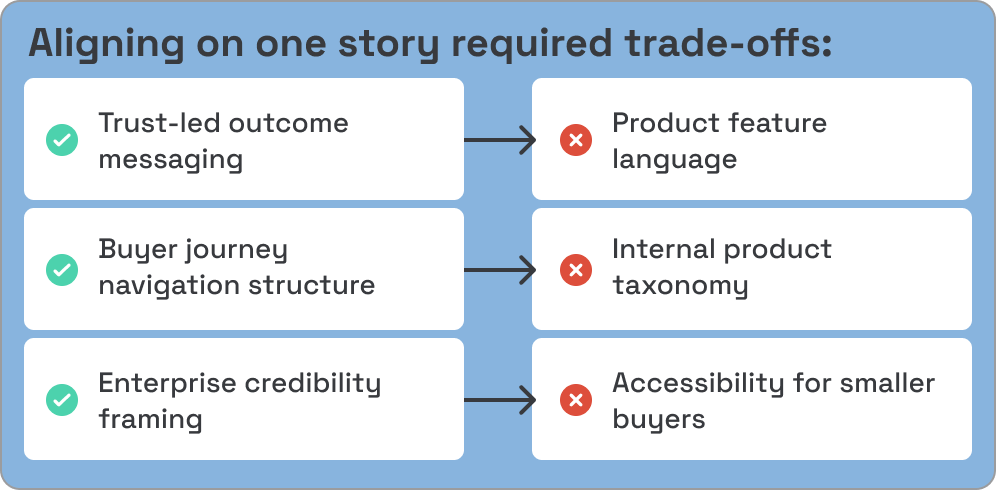
What I Led
I led weekly collaborative work sessions with the full leadership team, using live IA mapping and wireframing to make trade-offs visible in real time. Getting decisions made in the room was the only way to hit the deadline without late-stage revision cycles.
Phase 1: Alignment & Strategy
Stakeholder navigation
Facilitated sessions with CEO, CMO, CPO, sales, content, and design, each with competing priorities for the launch
Used live persona, sitemap, and wireframe sessions to surface conflicts early and force alignment before design began
Built a priority message framework establishing one clear hierarchy per page based on buyer decision journey
Persona synthesis
Verato arrived with a 30+ page persona deck attempting to cover every healthcare role at once
Facilitated a whiteboard session to synthesize real users and validate priorities against actual client data
Narrowed to five working archetypes, with CIO and Chief Data Officer as primary buyer and Marketing and Growth as secondary proof
Experience foundations
Conducted B2B SaaS marketing analysis and observed sales presentations to ground content strategy in how buyers evaluate identity platforms
Interviewed product managers to separate technical accuracy from customer-relevant language
Built IA and user flows collaboratively with the client team to accelerate sign-off
The persona synthesis became the foundation the IA, navigation, and messaging work below was built against
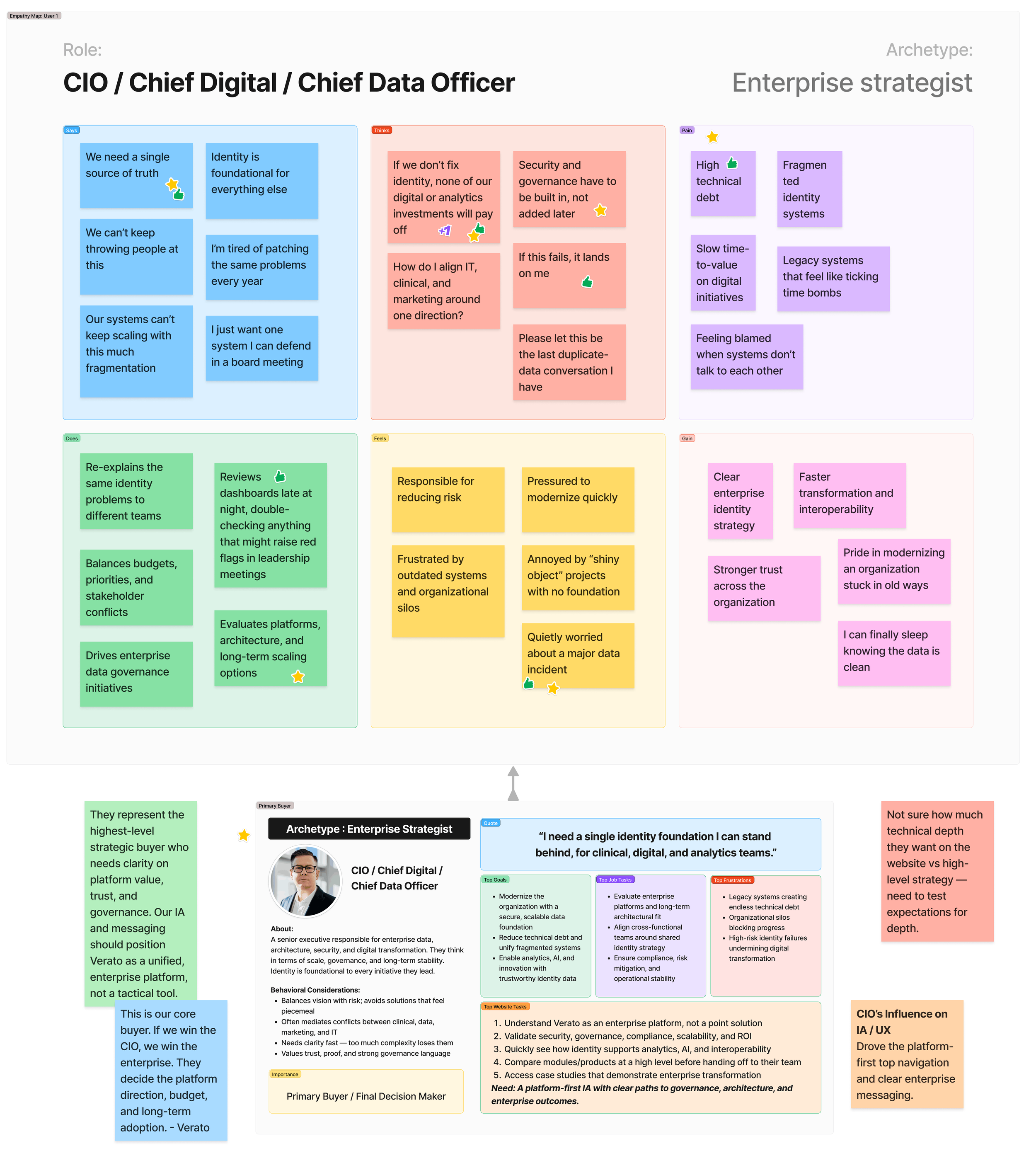
Empathy mapping for the CIO and Chief Data Officer, the Enterprise Strategist archetype and primary buyer whose governance, security, and scalability priorities anchored the platform-first navigation.
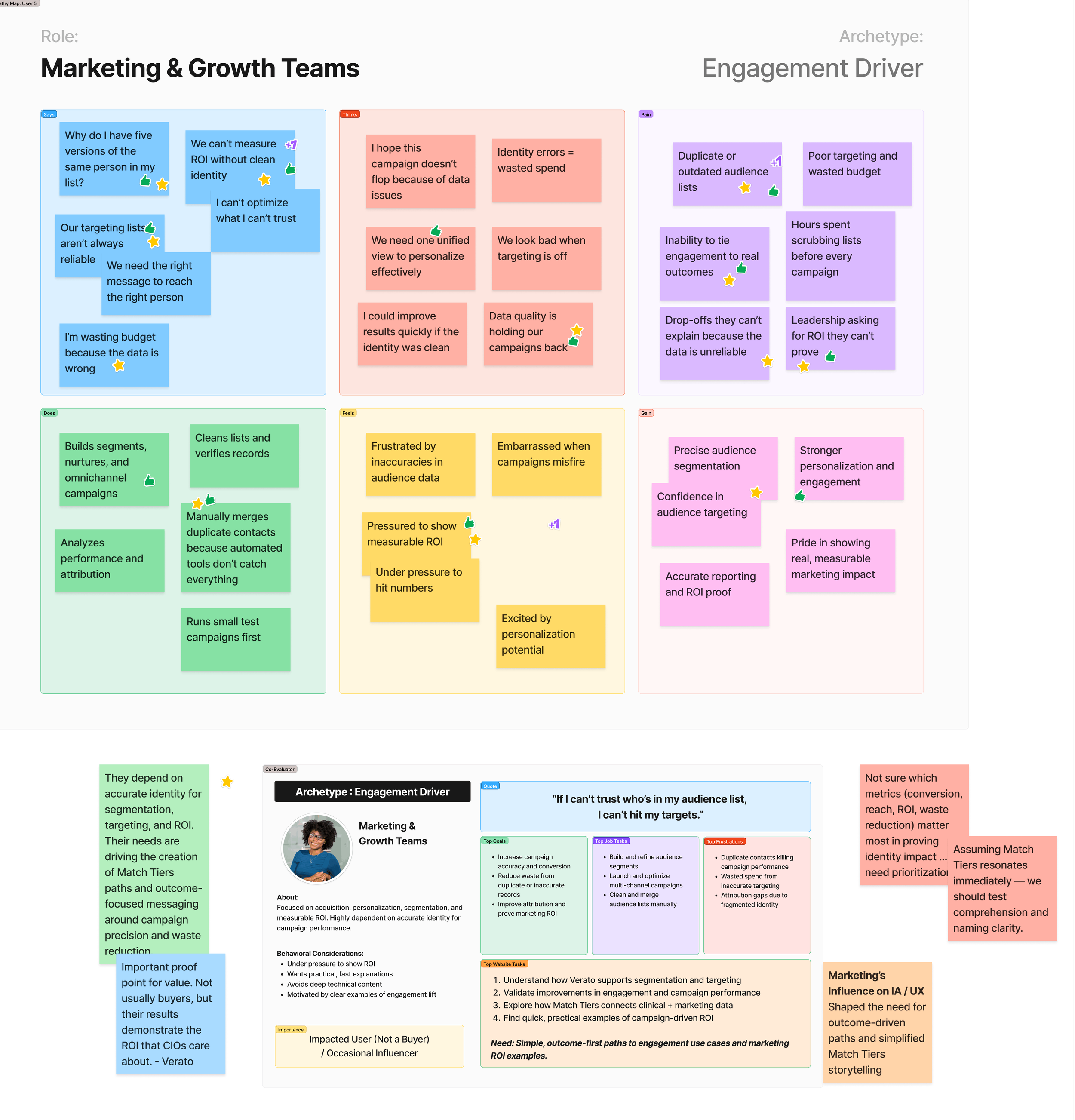
Empathy mapping for Marketing and Growth leaders, the Engagement Driver archetype whose attribution and ROI pressures shaped the outcome-led messaging structure.
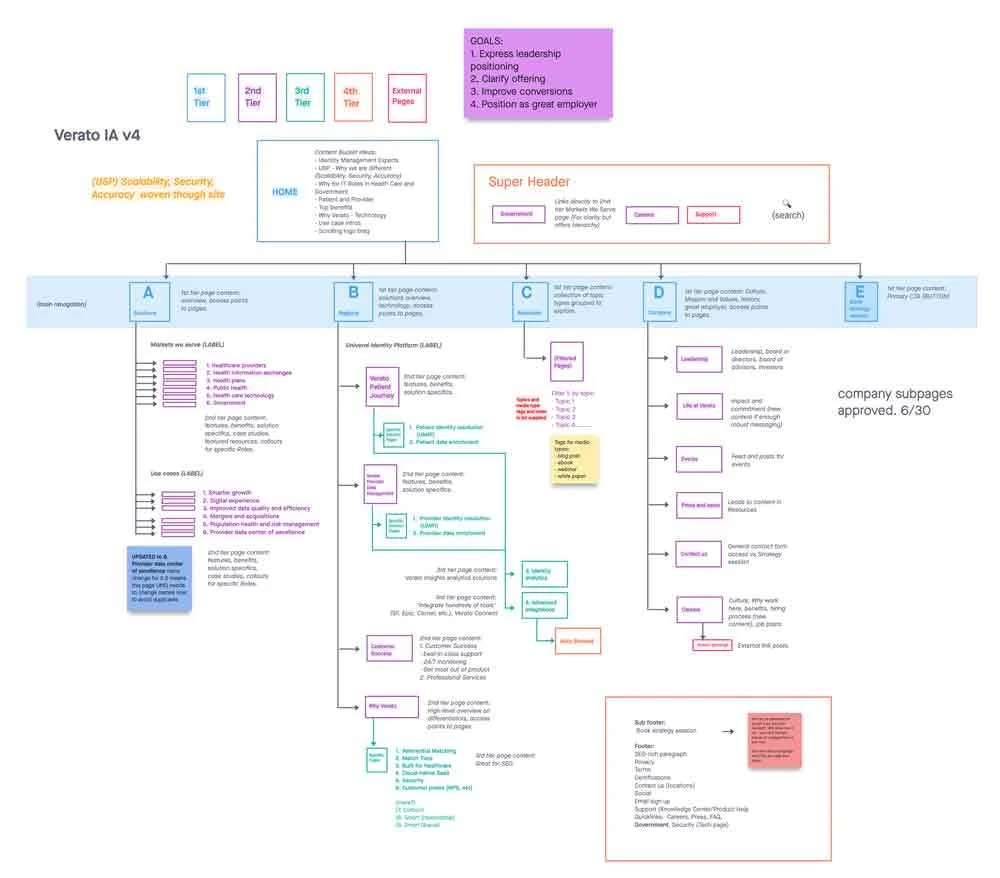
Information architecture built collaboratively with stakeholders, structured around buyer journey rather than internal product taxonomy.
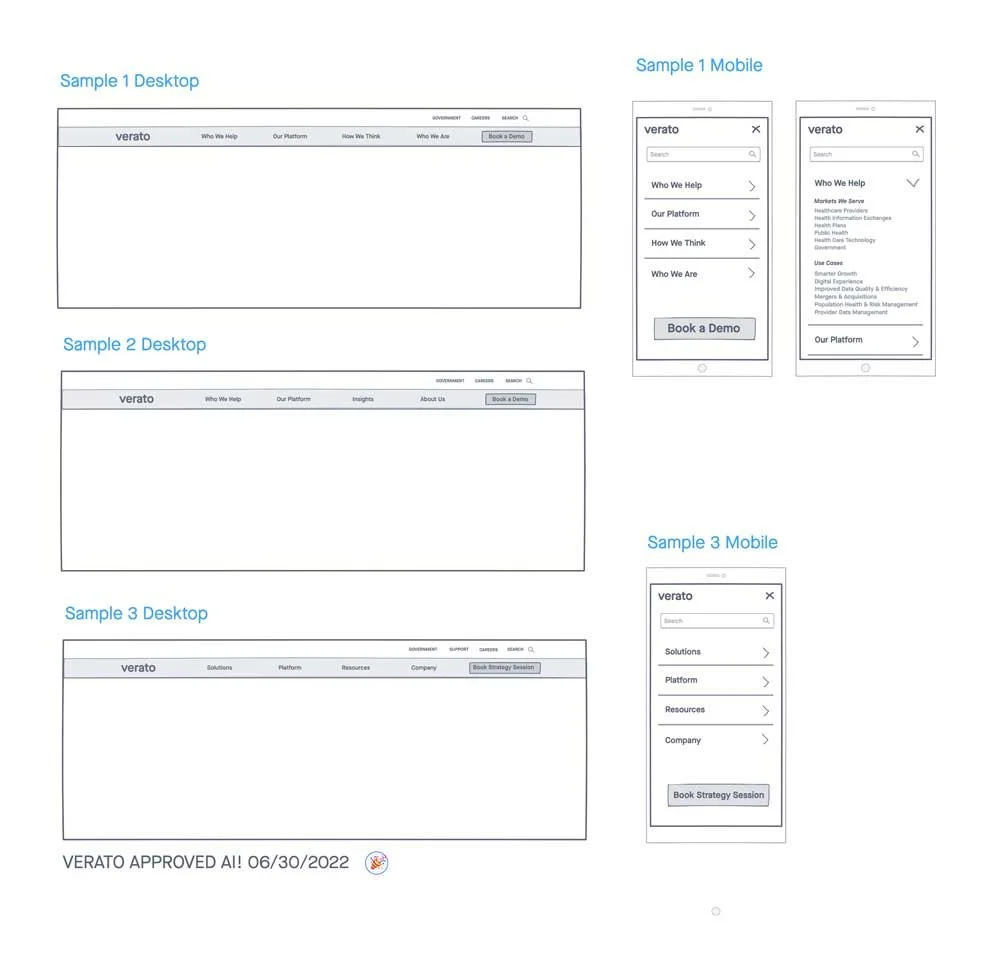
Three navigation concepts explored across desktop and mobile, testing how top-tier label language shaped buyer perception before a single page was designed.
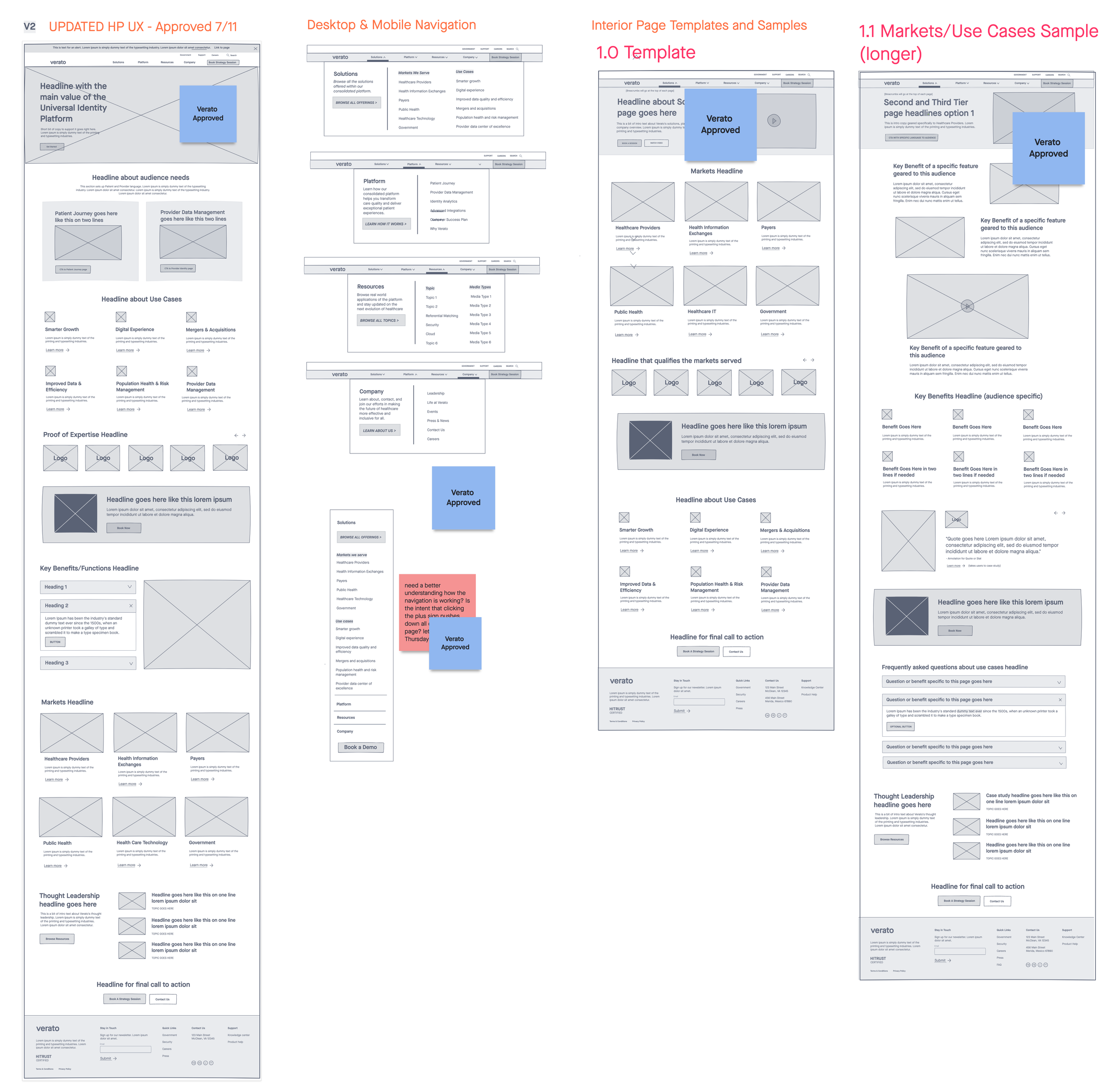
Collaborative wireframe sessions with live stakeholder sign-off with approval stamps visible in working files reflecting the weekly sprint review process.
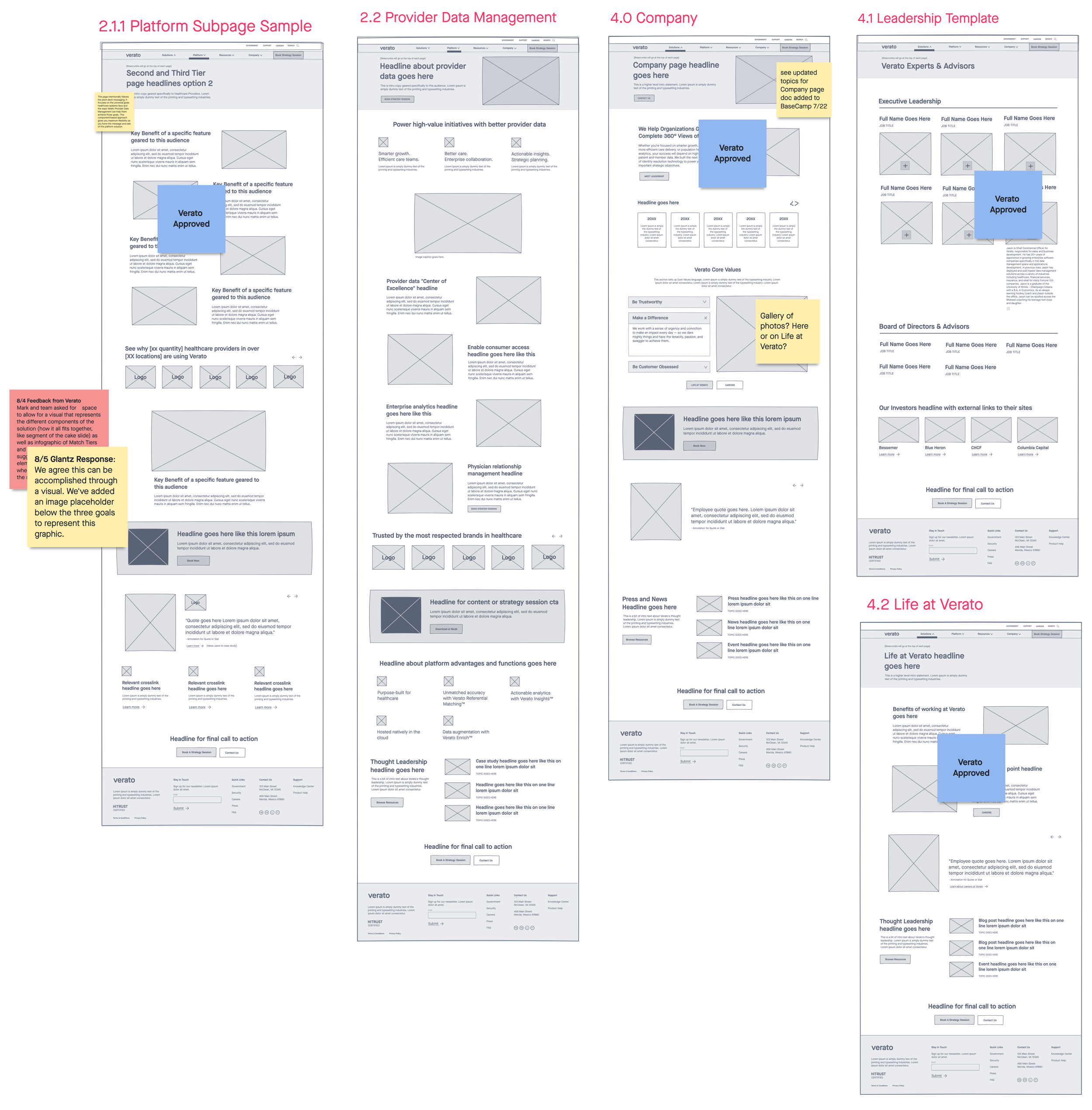
With the Personas, IA and UX approved and stakeholder alignment locked, execution could move at sprint speed.
Phase 2: Creative Direction & Execution
With alignment locked, I led the Glantz design and engineering team through execution, maintaining the strategic decisions made in Phase 1 as a quality filter across every design choice.
Visual direction and design system
Established creative direction balancing Verato's technical credibility with human storytelling, a deliberate choice for an audience that is risk-averse and skepticism-first
Built visual language and design system the internal Verato team could extend after launch
Collaborated with Verato's internal creative director on brand system and style guide, building from the web design direction outward to ensure consistency across strategy, visuals, and messaging
Execution
Art directed animation approach for the Patient Journey platform, using scroll-triggered motion to ground complex data concepts in human stories
Led design and engineering sprints maintaining decision clarity and quality standards under a firm deadline
Partnered with (un)Common Logic on SEO keyword integration woven throughout page content
Ensured every deliverable traced back to the priority message framework established in Phase 1
The creative direction decision
Lead with human faces over technical diagrams. Use the hexagon system to connect identity data to real patients, not data architecture.

Final navigation architecture in production. Buyer journey structure replaced internal product taxonomy, giving enterprise buyers a direct path to outcomes rather than features.

Patient Journey platform section with a scroll-triggered illustration approach developed to make data resolution concepts tangible without requiring technical literacy.

The hexagon visual system connected Verato's identity matching capability to real patient outcomes, making abstract data concepts human and scannable for enterprise buyers.
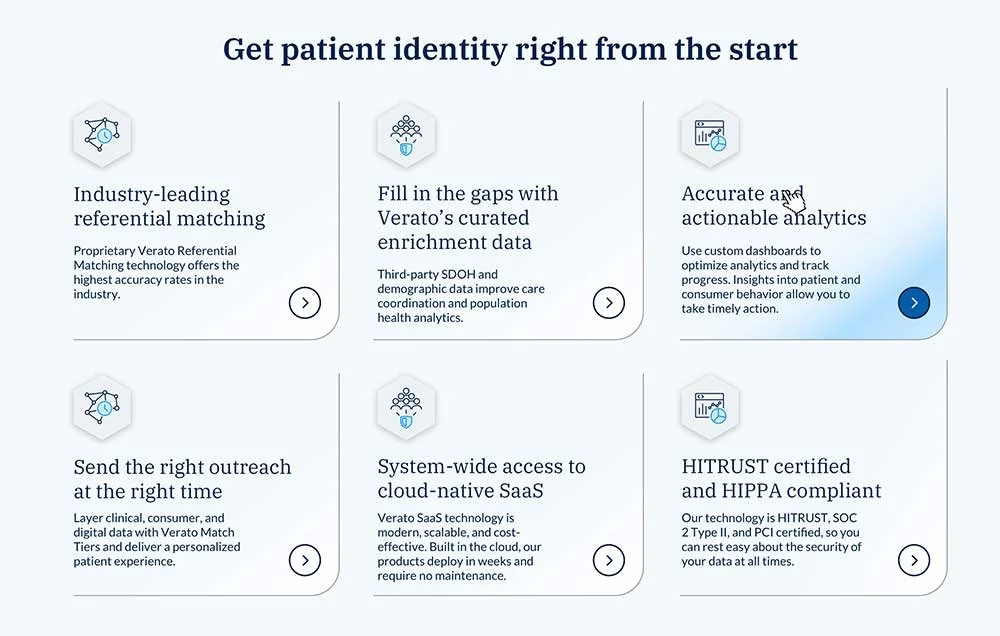
Platform component showing the trust-led narrative in execution, leading with patient outcomes rather than technical specifications.
Before and After
Before and after homepage design, showing the shift from technology-led to trust-led visual and content strategy
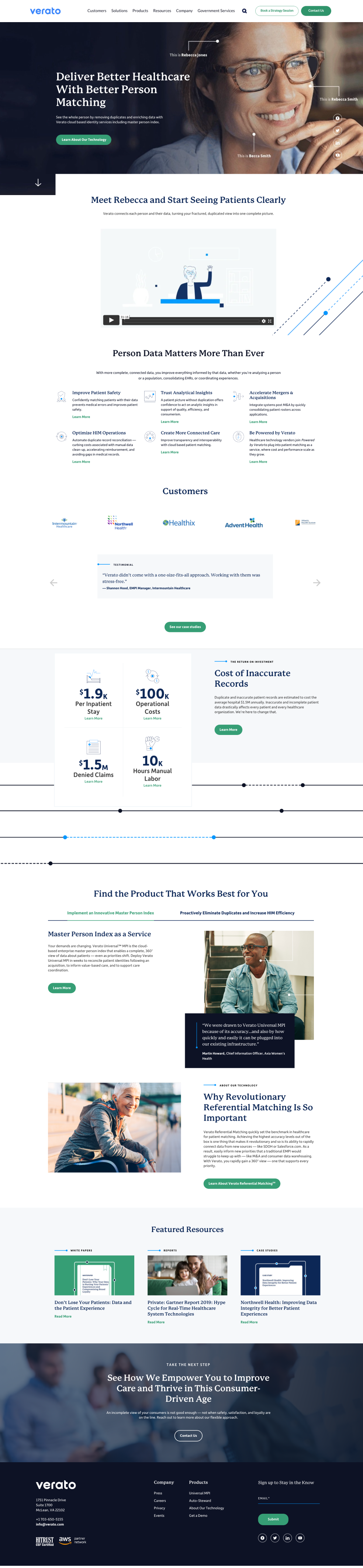
Before: Verato Homepage
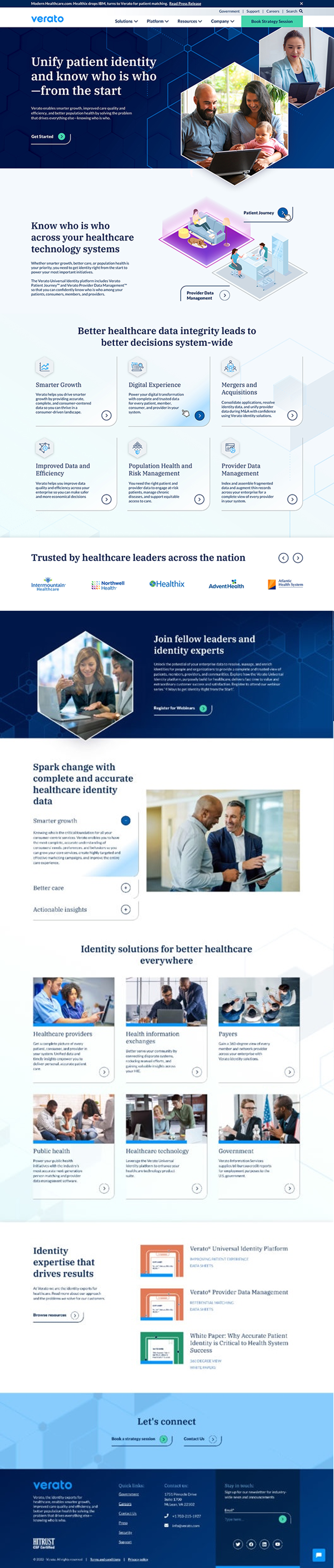
After: Verato Homepage
Outcomes
Launch Results
115% increase in organic conversions
2.3X pipeline growth following launch
Structural Results
Five competing stakeholder groups aligned on a single product story before design began
Consistent decisions about how trust, identity, and data integrity were expressed across the platform
Shared experience framework used by product, design, and go-to-market teams beyond the initial launch
Scalable page template system giving the internal team clear principles for ongoing product and experience decisions